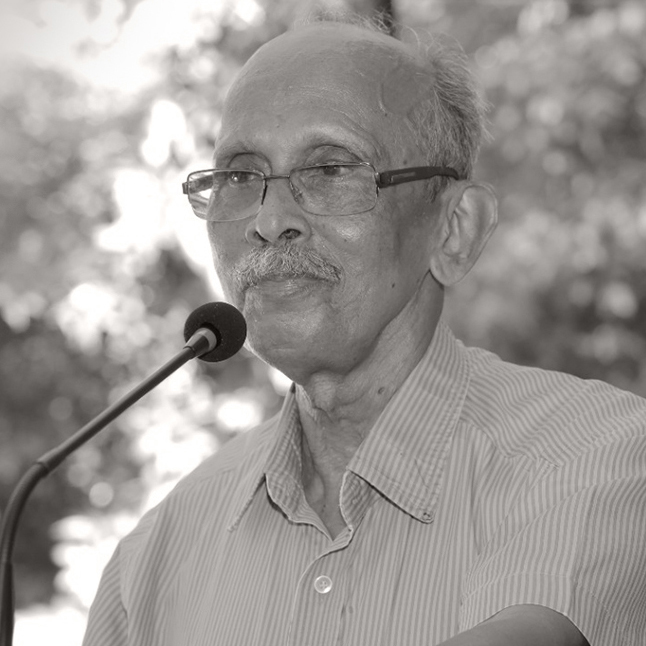
Policy Paper by Dr K. M. George
CEO – Sustainable Development Forum & Secretary-General, GMF
Former United Nations Professional
Executive Summary
Kerala, though globally acclaimed for its high literacy and health indicators, faces a paradox that continues to challenge its development narrative. The state’s higher education and skill development ecosystem, despite widespread access, fails to consistently achieve global standards of quality, employability, and innovation. The proposed Kerala Skill Development and Entrepreneurship University (KSDEU), envisioned under Vision 2031, seeks to transform this landscape through a model of education rooted in entrepreneurship, vocational excellence, applied research, and innovation-led growth.
However, Kerala’s structural barriers — including declining academic quality, persistent youth migration to Europe, North America, and parts of Asia, as well as entrenched political interference and the overwhelming dominance of private autonomous colleges — represent critical threats. Without deliberate, phased, and measurable strategies, KSDEU risks becoming yet another high-profile but underperforming institution that produces graduates ill-equipped for the realities of a competitive global labour market.
This paper presents an integrated framework combining a detailed SWOT analysis, a Vision 2031 Roadmap, and a set of cost-effective policy strategies aimed at ensuring that KSDEU emerges as a globally recognised, innovation-driven university. It also contextualises the university’s role within India’s rapidly evolving higher education landscape, where the rise of powerful private universities and the entry of foreign campuses will redefine standards of excellence, employability, and global recognition.
The ultimate objective of Vision 2031 is not merely to establish another university but to redefine Kerala’s educational purpose — transforming it from a degree-oriented to a skill- and enterprise-oriented knowledge economy that nurtures global professionals, innovators, and social entrepreneurs.
Context and Rationale
- Youth Exodus and Brain Drain
Kerala continues to witness an unprecedented outflow of its youth to countries such as Germany, the UK, Ireland, Canada, Australia, and the Gulf states. While remittances have historically buoyed the state’s economy, the scale of this migration reveals deep systemic deficiencies: a mismatch between local education and global employability, limited job creation, and an absence of innovation-led industries. KSDEU must therefore be designed as a retention and transformation hub, reversing the trend of brain drain by offering globally competitive programmes within the state.
- Quality Gap in Higher Education
Despite universal literacy and a dense network of colleges, Kerala’s higher education system struggles with mediocrity in faculty quality, outdated curricula, and limited research infrastructure. The prevalence of rote learning, minimal exposure to international academic practices, and lack of focus on applied research contribute to graduates being inadequately prepared for the demands of a modern economy. KSDEU must directly tackle these structural weaknesses by creating a research-oriented, skill-driven academic model aligned with global standards.
- Labour Market Mismatch
Kerala’s graduates often occupy blue-collar jobs abroad or engage in underemployment, despite holding formal university degrees. This phenomenon indicates a disconnect between education and the labour market, where academic qualifications do not translate into employable skills. KSDEU must therefore redefine curricula to prioritise practical, outcome-based learning that integrates technology, problem-solving, and entrepreneurship.
- Political and Union Influence
Kerala’s universities have historically faced disruptive influences from student and faculty unions such as the Kerala Students Union (KSU), Akhil Bharatiya Vidyarthi Parishad (ABVP), Students’ Federation of India (SFI), and Democratic Youth Federation of India (DYFI). While these organisations play legitimate roles in democratic student representation, their pervasive influence often leads to frequent strikes, campus closures, and disruptions that undermine academic integrity and discipline. For KSDEU to succeed, academic autonomy and political neutrality must be strictly enforced through statutory frameworks and independent governance mechanisms.
- Private Sector Dominance
Kerala’s educational space is heavily influenced by private autonomous colleges, many of which operate with superior infrastructure, aggressive marketing, and global collaborations. These institutions attract high-performing students and faculty, often leaving public universities under-resourced and less competitive. Unless KSDEU differentiates itself through research excellence, innovation ecosystems, and international partnerships, it risks being overshadowed by the private sector’s dominance.
- Global Benchmarking Imperative
Globally, universities such as Nirma University (Gujarat), Pandit Deendayal Petroleum University (Gandhinagar), Manipal Academy of Higher Education (Karnataka), and Amity University (Noida) have successfully created niche identities through research-driven, industry-linked education. Internationally, models from Singapore, Finland, and MIT (USA) showcase how strong governance, global collaboration, and entrepreneurship incubation can transform universities into engines of economic growth. KSDEU must adopt these best practices, adapting them to Kerala’s socio-economic context.
Expanded SWOT Analysis
(Clarified for broader readers and reflecting recent developments in India’s higher education landscape)
| OPPORTUNITIES (External) | THREATS (External) | |
| 1. Global Collaborations: Partnerships with institutions such as MIT, NUS (Singapore), and the University of Liverpool can bring dual degrees, faculty exchanges, and international recognition. | 1. Youth Exodus Abroad: Persistent migration of Kerala’s educated youth to foreign universities and employers drains local human capital and weakens domestic innovation capacity. | |
| 2. Industry Linkages and Start-up Ecosystem: KSDEU can attract investment and knowledge partnerships from industry, becoming a centre for applied research, innovation, and entrepreneurship. | 2. Private Sector Dominance: Established private universities with large endowments and aggressive outreach, such as Amity, Lovely Professional, SRM, and O. P. Jindal, could overshadow KSDEU unless it carves a clear niche. | |
| 3. Emerging Skill Sectors: The rise of AI, data analytics, green energy, health tech, and robotics provides an opportunity for KSDEU to design job-ready programmes. | 3. Union and Strike Culture: Student and faculty unions (KSU, SFI, ABVP, DYFI) pose an ongoing threat to academic continuity, potentially leading to frequent disruptions. | |
| 4. International Accreditation: Attaining ABET, AACSB, or similar accreditations will provide a mark of quality and global recognition for KSDEU’s programmes. | 4. Financial Mismanagement or Overexpansion: Rapid scaling without proper controls could lead to inefficiency and quality dilution. | |
| 5. Foreign Universities in India: The entry of global universities may offer partnership opportunities for co-branding and joint research, but also intense competition. | 5. Market Irrelevance: Without continuous curriculum updates and measurable employability outcomes, KSDEU risks becoming irrelevant in a rapidly evolving job market. | |
The Changing Landscape of Higher Education in India
- Rise of Private-Class Universities
Over the past decade, India has witnessed a dramatic rise in private universities that have redefined academic standards through autonomy, international collaborations, and market-driven programmes. Prominent examples include:
- Amity University (Noida) – A global education network with campuses in London, Dubai, and Singapore, known for large-scale infrastructure and industry-oriented programmes.
- O. P. Jindal Global University (Haryana) – India’s first private university to achieve QS global rankings through academic excellence and strong international faculty recruitment.
- Ashoka University (Haryana) – Focused on liberal arts and interdisciplinary education, offering high academic standards and global partnerships.
- Manipal Academy of Higher Education (MAHE) (Karnataka) – A pioneer in medical and engineering education with a strong global alumni base.
- SRM Institute of Science and Technology (Tamil Nadu) and Lovely Professional University (Punjab) – Large, resource-rich universities with diverse programmes and international tie-ups.
- Nirma University (Gujarat) and Pandit Deendayal Petroleum University (PDPU) – Examples of how private-sector-driven universities can blend research with industry relevance.
These institutions have established themselves as benchmarks for flexibility, infrastructure, and employability, posing stiff competition to public-sector universities.
- Emergence of Foreign University Campuses in India
The University Grants Commission (UGC) has recently permitted foreign higher education institutions (FHEIs) to establish campuses in India. This marks a paradigm shift towards internationalisation. As of 2025:
- Fifteen foreign universities are expected to establish Indian campuses by 2026–27.
- Institutions such as the University of Liverpool (UK), Illinois Institute of Technology (USA), Western Sydney University (Australia), Victoria University (Australia), and IED Istituto Europeo di Design (Italy) have already received Letters of Intent (LoIs).
- The University of Liverpool has announced plans to set up its first campus in Bengaluru, with courses in business analytics and sustainable engineering.
- The Illinois Institute of Technology plans to collaborate on research-led engineering and technology programmes in India.
While this opens opportunities for collaboration, it also raises the competitive bar for Indian institutions, compelling them to meet international academic and administrative standards.
For KSDEU, this development is both a challenge and an opportunity. It must adapt swiftly by offering world-class programmes locally and forming partnerships rather than competing head-on with foreign campuses.
Vision 2031 Roadmap
Core Pillars
- Faculty Excellence
Recruit globally qualified faculty, introduce performance-linked incentives, and establish visiting professorships from leading international institutions. - Skill-Oriented Curriculum
Prioritise future-ready sectors such as Artificial Intelligence, renewable energy, biotechnology, digital technologies, and entrepreneurship. - Research and Innovation
Develop incubation centres and applied research clusters; promote interdisciplinary projects addressing regional and global challenges. - Global Collaboration
Formalise international partnerships for dual degrees, joint research, and student mobility programmes.
Strategic Milestones
| Phase | Years | Key Initiatives |
| Phase I | 2025–2027 | Launch pilot programmes, recruit core faculty, establish incubation hubs, and create autonomous governance structures. |
| Phase II | 2027–2030 | Expand industry partnerships, strengthen global collaborations, and implement outcome-based evaluation frameworks. |
| Phase III | 2030–2031 | Achieve global accreditations, scale innovation ecosystems, and attract international students and researchers. |
Interaction with the Private Sector
Private autonomous colleges dominate through superior resources and aggressive branding. KSDEU must counter this influence by:
- Establishing Public-Private Partnerships (PPPs) for joint research, laboratories, and start-up incubation.
- Introducing faculty exchange programmes with top private universities to share expertise without inflating budgets.
- Positioning KSDEU as a research-led, globally networked public institution rather than a traditional degree provider.
Cost-Effective Strategies to Counter Private Sector Dominance
- Strategic PPPs: Collaborate with industries to co-create laboratories, mentorship schemes, and applied research projects to minimise capital expenditure.
- Performance-Based Incentives: Introduce grants and international exposure programmes for high-performing faculty.
- Shared Resource Networks: Form consortia with other universities to share advanced equipment and research facilities.
- Global Knowledge Transfer: Engage in joint research with international partners supported by foreign grants.
- Outcome-Linked Funding: Tie state and private funding to measurable outputs such as patents, start-ups, and graduate employability.
- Revenue Diversification: Offer online certifications, professional short courses, and executive training programmes.
- Brand Differentiation: Emphasise KSDEU’s public ethos, transparency, and global accreditation as marks of trust.
- Phased Campus Development: Build modular infrastructure aligned with enrolment and demand to maintain quality control.
Fifteen Key Recommendations
- Rigorous global-standard faculty recruitment.
- Outcome-based curricula aligned with emerging markets.
- International collaborations with leading universities.
- Establishment of incubation and innovation labs.
- Technology-enabled adaptive learning platforms.
- Independent, autonomous governance structures.
- Performance-linked accountability systems.
- Pursuit of international accreditations (ABET, AACSB, etc.).
- Merit- and need-based scholarships to attract top students.
- Industry advisory boards for curriculum development.
- Strategic countermeasures against private sector dominance.
- Phased, quality-focused expansion of infrastructure.
- Public-private partnerships for shared development.
- Incentive mechanisms to attract and retain global faculty.
- Strong alumni and community engagement for mentoring and funding.
SWOT-Integrated Visual Roadmap Concept
A visual representation of this strategic framework could include:
- Quadrants: Strengths, Weaknesses, Opportunities, Threats
- Overlay Arrows: Causal pathways linking core pillars (Faculty, Curriculum, Research, Collaboration) to challenges (private dominance, political interference, migration).
- Timeline Layer: Phases I–III (2025–2031).
- Private Sector Pressure Layer: Dotted arrows showing competition from private and foreign universities.
- Counter-Strategies: PPPs, faculty incentives, international partnerships.
- Icons: Representing universities, innovation labs, industries, governance shields, and global partnerships.
This conceptual diagram can be easily converted into an infographic using PowerPoint or Canva.
Conclusion
The establishment of the Kerala Skill Development and Entrepreneurship University (KSDEU) represents a defining moment in the evolution of Kerala’s higher education system. If executed with vision and discipline, KSDEU can become a catalyst for the state’s transition into a knowledge-driven, innovation-based economy.
However, the pathway is narrow. Success will depend on faculty excellence, political neutrality, internationalisation, and measurable outcomes. The university must avoid the pitfalls that have plagued earlier institutions — bureaucratic inertia, political interference, and inadequate quality assurance.
At a time when private universities in India are rapidly expanding and foreign universities are setting up local campuses, KSDEU must strategically position itself as a globally competitive, publicly accountable, skill-centred university that embodies Kerala’s intellectual and social ideals.
With robust governance, international partnerships, and a commitment to quality, KSDEU can, by 2031, stand alongside benchmark institutions such as MIT, NUS, and Nirma University — proving that public universities, when reimagined with excellence and integrity, can be both globally relevant and socially transformative.