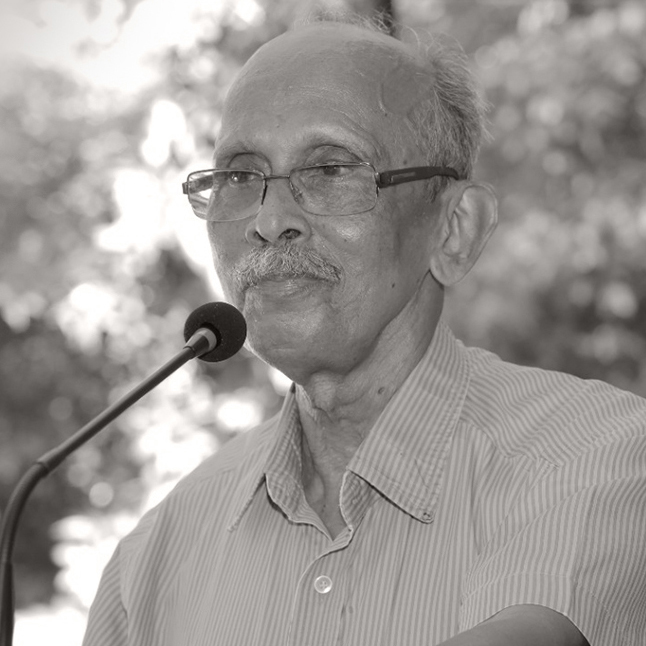
By Dr K. M. George
CEO, Sustainable Development Forum & Secretary-General, Global Millets Foundation
Former UN Advisor and global development consultant who has travelled to 15,000 villages worldwide, engaging with over 160,000 stakeholders on issues of ethics, environment, and sustainability.
Abstract
As Artificial Intelligence (AI) reshapes modern civilisation, it challenges every sacred tradition to rethink what it means to be human, moral, and divine. From Judaism to Hinduism, Christianity to Islam, Buddhism to Sikhism, and from tribal nature worship to Pentecostal revivals, faith communities face a critical choice: resist the algorithm or redeem it. This article explores how ancient religions can embrace AI as an ally of compassion and justice—and concludes with ten practical recommendations for religious leaders to ensure that AI remains the handmaid of modern religion.
The Age of AI and the Crisis of Meaning
Human civilisation stands at a fascinating crossroads. Artificial Intelligence—once the dream of science fiction—has now become a living force shaping everything from medicine to morality, from economics to worship. As machines begin to “think” and “speak” like humans, they awaken deep spiritual questions: What is consciousness? What is the soul? Can wisdom be coded?
AI reflects both the genius and the anxiety of humanity. It mirrors our yearning for mastery and meaning. Yet it also tempts us to forget the divine origin of intelligence itself. Religions must now decide whether AI will serve as a servant of compassion—or a substitute for conscience.
A Mirror to the Soul
In the moral imagination of humankind, intelligence was once the domain of gods and prophets. Now, algorithms predict our desires, compose prayers, and even generate sermons. This provokes the oldest theological inquiry: what distinguishes the human from the mechanical?
Every major religion—Judaism, Hinduism, Christianity, Islam, Buddhism, and others—centres on the sanctity of consciousness. AI therefore challenges not doctrine alone but the very hierarchy of creation. Machines may simulate thought, but can they love, forgive, or worship?
Responses of the Ancient Faiths
Judaism
Rooted in divine wisdom, Judaism sees knowledge as sacred service. AI can amplify Tikkun Olam—the call to repair the world—if used for justice and compassion. But rabbis warn that algorithms interpreting scripture without human heart risk turning revelation into raw data.
Hinduism
In Hindu metaphysics, consciousness (Chaitanya) pervades all creation. Thus, AI could be viewed as a new expression of divine energy—Shakti—if directed towards Dharma (righteous living). Yet the moral challenge remains: can machines, lacking karma and soul, act without moral consequence?
Christianity
Christian thought asks whether machines can ever embody divine image (Imago Dei). Pope Francis has called for a “theology of technology” to ensure AI serves the common good. The Orthodox and Anglican churches echo this concern, warning that empathy and confession cannot be replaced by algorithms. Grace, they remind us, is beyond programming.
Islam
Islam upholds the principle of Khilafah—human stewardship of creation. AI must, therefore, reflect ethical accountability. The Qur’an’s reverence for knowledge (‘Ilm) encourages innovation, yet warns against arrogance (Shirk). AI must serve creation, not dominate it.
Eastern Pathways of Harmony
Buddhism
For Buddhism, mind is a continuum, not a fixed entity. Can an AI experience Dukkha (suffering) or attain Nirvana? Probably not—but it can still be trained in compassion. Buddhist ethics could guide AI development towards mindfulness and benevolence rather than profit and power.
Jainism
Jain values of Ahimsa (non-violence) and self-restraint challenge the exploitative uses of technology. When AI aids sustainability and kindness, it aligns with Jain dharma; when it fuels consumerism and surveillance, it violates it.
Confucianism
Confucian thought emphasises harmony, respect, and virtue. China’s AI policies, often invoking Confucian ideals, risk losing their ethical soul if used for control rather than compassion. The principle of Ren—benevolence—should guide all AI governance.
Faiths of Fire and Spirit
Sikhism
Sikh theology teaches the oneness of God and equality of all beings. AI, used rightly, can serve Seva (selfless service)—educating the poor, empowering women, preserving justice. But if it widens inequality, it betrays the Guru’s vision.
Pentecostal and Evangelical Movements
In Pentecostalism, faith is felt through the living Spirit. While AI may simulate preaching, it cannot replicate divine inspiration. Yet, as a missionary tool—translating scripture, streaming worship, or comforting the lonely—AI can extend the reach of the Gospel.
Voices of the Earth: Indigenous Wisdom
Aboriginal Australians, Native Americans, African animists, and tribal faiths of Asia perceive spirit in every element of nature. To them, AI is both a marvel and a menace. It can document endangered languages, protect ecosystems, and revive ancient wisdom—but if used for extraction or domination, it violates sacred balance. Their message to modernity is timeless: “Technology without reverence is desecration.”
Organised Religions and the Risk of Redundancy
Institutional religions—Catholic, Orthodox, Anglican, and others—face a silent crisis of relevance. Younger generations are turning to digital spaces for meditation and moral guidance. Virtual chaplains and AI confessors now simulate spiritual counsel. The challenge for faith leaders is to reclaim these frontiers, not retreat from them.
As the Church once baptised the printing press, it must now baptise AI with wisdom and compassion.
AI as the Handmaid of Faith
Properly guided, AI can serve religion rather than subvert it. Imagine systems that translate scriptures across cultures, or algorithms that analyse moral teachings to find shared values among faiths. Visualise virtual pilgrimages that bring Mecca, Jerusalem, or Varanasi to those unable to travel. When AI amplifies empathy, preserves sacred heritage, or nurtures the environment, it becomes a new form of prayer—action made intelligent.
The Ethical Imperative
Religious leaders cannot afford silence. They must engage scientists and policymakers in building moral firewalls around technology. The dialogue between monasteries and laboratories, temples and tech parks, should shape the conscience of the 21st century. As medieval scholastics reconciled faith and reason, we must reconcile spirituality and simulation.
Ten Recommendations to Make AI the Handmaid of Modern Religion
- Form Global Interfaith AI Ethics Councils – Unite theologians and technologists to develop shared moral principles.
- Preserve Sacred Heritage Digitally – Employ AI to archive, restore, and translate ancient scriptures and oral traditions.
- Educate Clergy on Digital Ethics – Include AI literacy in seminaries, monasteries, and madrasas.
- Promote Compassionate Algorithms – Train AI models on moral literature to embed empathy into design.
- Deploy AI for Ecological Protection – Use predictive data to safeguard forests, rivers, and sacred landscapes.
- Define Boundaries for AI in Worship – Keep prayer, confession, and blessing as sacred human acts.
- Bridge the Digital Divide – Ensure rural and marginalised communities access spiritual technologies.
- Engage Youth through Digital Faith Platforms – Harness AI creativity for intergenerational dialogue and service.
- Encourage Interfaith Harmony – Let AI reveal ethical common ground among world religions.
- Reaffirm the Supremacy of the Human Soul – Declare that while machines can think, only humans can love, forgive, and commune with the Divine.
Conclusion
The rise of AI is not a threat to faith but a test of it. If guided by conscience, AI can help humanity rediscover awe—the very essence of spirituality. But if left unchecked, it may erode the mystery that binds us to the Divine.
The call before the world’s faith leaders is clear: let technology serve transcendence, not replace it. In doing so, we ensure that AI becomes not our master, but our humble handmaid of modern religion.