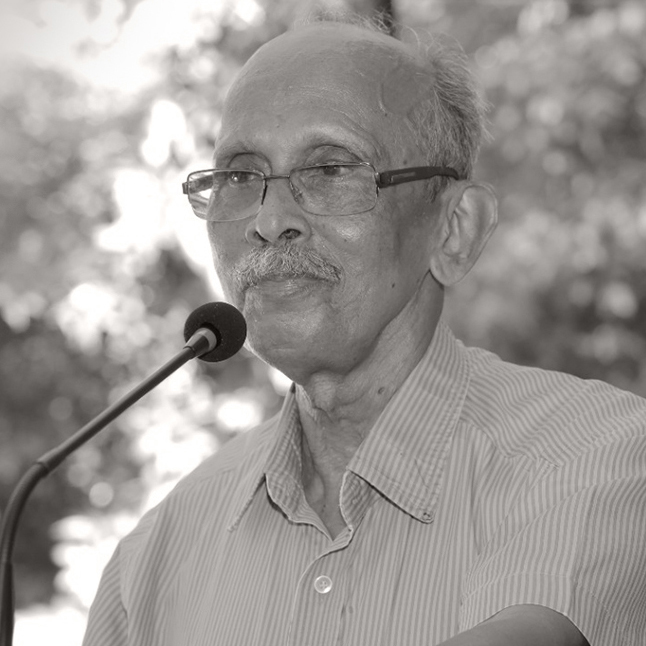
By Dr K. M. George
CEO, Sustainable Development Forum; Secretary-General, Global Millets Foundation
Executive Summary
Two years into Ajay Banga’s presidency, the World Bank is reshaping itself at speed — decentralising leadership from Washington to regional hubs, scaling up climate finance to 45 per cent of total operations, and betting on private capital mobilisation and job creation as the unifying purpose of development.
This transformation, if properly anchored, could redefine multilateral development finance for a new era of climate urgency and fiscal constraint. But it also carries risks: over-financialisaton, excessive donor dominance, and growing distance from the poorest.
Drawing on the latest data and country-level evidence from Bangladesh, India, Sri Lanka, Kenya, Ghana, and Ethiopia, this essay examines whether Banga’s reform drive is making the World Bank faster and fairer — or merely leaner and riskier. It argues for six policy anchors: real devolution of authority, ring-fenced climate adaptation finance, public-interest safeguards for securitisation, stakeholder accountability, governance reform, and renewed investment in Southern knowledge partnerships.
The conclusion is stark: unless equity, concessionally and community voice remain central, the World Bank’s reform gamble could deepen existing divides. With the right safeguards, however, it may yet deliver the long-awaited renaissance in global development cooperation.
Part I — Promise, Politics and the New Architecture
When Ajay Banga assumed office as President of the World Bank in June 2023, expectations were unusually high. A private-sector leader with Indian roots and global credentials, he vowed to make the Bank faster, simpler and more outcome-driven.
Two years later, that promise is taking tangible form: the consolidation of overlapping divisions, flatter hierarchies, a focus on climate and digital finance, and closer engagement with private investors. The declared ambition is clear — a Bank that responds nimbly to the century’s defining crises: climate shocks, food insecurity, debt distress, and the digital divide.
Decentralisation: from Washington to the World
In 2025, the Bank announced that regional vice-presidents and senior managers would relocate to hubs in Nairobi, Dubai and Singapore, so that two-thirds of operations staff would be based in their respective regions. If fully implemented, this decentralisation could shorten decision chains and give country offices genuine authority.
Climate finance as the organising principle
The Bank has also made climate finance its new north star — pledging that 45 per cent of its annual commitments will support climate-related objectives by 2025. This is coupled with efforts to mobilise private capital through guarantees, blended finance and securitisation. IFC’s inaugural securitisation of development assets in 2025 marked a watershed, creating a model for attracting institutional investors.
These are ambitious moves — but they carry political and moral hazards. The Bank’s governance remains heavily tilted toward its major shareholders, especially the United States and Japan, giving donor interests disproportionate influence. Efficiency without equity risks reinforcing the very asymmetries the Bank seeks to correct.
Part II — Country Case Studies: South Asia and Africa
- Bangladesh — Climate resilience and urban futures
Why it matters: One of the world’s most climate-exposed nations, Bangladesh loses billions to heat stress and floods each year — US$1.78 billion in 2024 alone.
Bank response: Between late 2024 and 2025, the Bank approved over US$1 billion for climate-resilient urban infrastructure, sanitation and health.
Assessment: These projects are crucial yet vulnerable to over-reliance on private co-finance. Resilient cities need more adaptation grants and fewer debt-linked conditions.
- India — Jobs, urban resilience and digital infrastructure
Why it matters: India’s needs for climate-proofed infrastructure could exceed US$2.4 trillion by 2050.
Bank response: Operations in 2024–25 span solar innovation, climate-smart agriculture, and higher education reform. The “jobs agenda” now frames the Bank’s India strategy.
Assessment: India exemplifies where the Bank’s integrated approach works — but also where blended finance cannot replace public investment. Concessional finance must continue to protect social inclusion and affordability.
- Sri Lanka — Debt stress and social protection
Why it matters: The 2022–24 crisis underscores the perils of market-driven reforms amid fragile governance.
Bank response: Policy support and technical assistance for fiscal stabilisation and welfare.
Assessment: A warning that private mobilisation without macro prudence or safety nets can deepen distress. Reforms must integrate debt sustainability and protection for the poorest.
- Kenya — Off-grid energy and green growth
Why it matters: Kenya’s pioneering work in off-grid solar and geothermal shows the value of innovation at the margins.
Bank response: Through MIGA, IFC and IDA, the Bank supports mini-grids, geothermal energy, and local capacity-building under the Mission 300 electrification plan.
Assessment: Guarantees and concessional grants have accelerated progress, but long-term success hinges on tariff fairness and local management capacity.
- Ghana — Stabilisation, energy reform and rights
Why it matters: Ghana’s fiscal stress and human-rights controversies test the limits of policy conditionality.
Bank response: A US$360 million macro and energy reform package plus an energy access compact.
Assessment: Conditionality must be tethered to inclusive governance and rights protections; otherwise, reputational risks will outweigh financial gains.
- Ethiopia — Reform during debt restructuring
Why it matters: A frontline case for balancing macro reform, debt relief and inclusive growth.
Bank response: In July 2025, a US$1 billion Development Policy Operation backed reforms in revenue mobilisation and private sector development.
Assessment: A promising template, provided coordination with the G20 Common Framework prevents renewed debt fragility.
Part III — Emerging Patterns
- Decentralisation without power is symbolism.
Only when local teams have budgetary control and delegated authority will speed and ownership improve. - Climate finance must prioritise adaptation.
Private money suits large mitigation projects; grants and concessional flows are essential for local adaptation. - Securitisation brings innovation and risk.
IFC’s originate-to-distribute model may attract long-term investors, but transparency and sovereign consent are indispensable. - Jobs must mean more than numbers.
Measurement of job quality, gender equity and sustainability should be integrated into project design. - Debt distress needs deeper concessionality.
Even with record IDA21 replenishment, low-income nations remain vulnerable. A “Resilience Grant Window” could help.
Part IV — Policy Anchors for Credible Reform
| Priority | Action | Rationale |
| 1. Devolution with teeth | Delegate approval powers to regional teams; publish decision dashboards. | Speed and ownership. |
| 2. Protect adaptation grants | Guarantee at least 50% of climate finance to be grant-equivalent in LICs. | Resilience for the poor. |
| 3. Safeguard securitisation | Public registry, transparent underwriting, country consent. | Prevent hidden fiscal risks. |
| 4. Dual accountability | Stakeholder panels with review rights; stronger Inspection Panel. | Build trust and legitimacy. |
| 5. Rebalance governance | Launch Fourth Shareholding Review to shift vote shares to developing countries. | Renew legitimacy. |
| 6. Invest in local knowledge | Restore research leadership; fund Global South partnerships. | Smarter, context-aware operations. |
Part V — Roadmap for 2026–27
- Complete decentralisation and evaluate outcomes within 18 months.
- Publish a verified climate finance taxonomy distinguishing mitigation from adaptation.
- Expand IDA-like concessionality and create a Resilience Grant Window.
- Codify blended finance disclosure and “no-harm” standards.
- Develop a Jobs Measurement Toolkit piloted in India and Kenya.
- Begin the Fourth Shareholding Review, framed as an investment in institutional legitimacy.
Part VI — Trade-offs and the Political Economy
True reform entails risk. Delegation may dilute control; grants reduce donor leverage; securitisation can both innovate and endanger. The art lies in piloting, learning and course-correcting.
The Bank’s authority stems from a moral compact among shareholders, borrowers and global citizens. Unless it harmonises these constituencies, it cannot remain both a financier of last resort and a moral steward of global equity.
Part VII — Closing Reflections: Bank, Movement or Both?
A modern multilateral bank must combine financial discipline with moral imagination. Ajay Banga’s reforms have rekindled energy and ambition — but to sustain them, the Bank must remain an institution of the world, not merely for its shareholders.
If decentralisation becomes genuine empowerment, if climate finance serves the vulnerable, and if governance reform deepens representation, the World Bank may yet fulfil its founding promise — a faster, fairer, and truly global development bank.
If not, history may record these years as another cycle of well-meant reforms that improved processes but not lives.
Appendix — Key References (as of October 2025)
- World Bank Group: Climate finance commitment (45%), Liveable Planet framework, IDA21 replenishment (Dec 2024).
- Reuters: “World Bank to decentralise operations” (Feb 2025).
- World Bank Country Releases: Bangladesh urban resilience (Dec 2024), India portfolio, Ghana stabilisation (June 2025), Ethiopia DPO (July 2025).
- IMF–World Bank Joint Communiqué: Scaling climate action (2025).
- Devex: Coverage of the Bank’s “Jobs as North Star” strategy (2025).
- Bretton Woods Project: Critical review of private-sector tilt (July 2025).
Box 1 — Climate Finance: Composition and Trends (2023–25)
| Year | Total Bank Financing (US$bn) | Climate-tagged (US$bn) | % Climate | Adaptation Grants (US$bn) | Mitigation (US$bn) | Private Capital Mobilised (US$bn) |
| 2023 | 80.0 | 25.0 | 31% | 8.0 | 17.0 | 5.0 |
| 2024 | 85.0 | 32.5 | 38% | 12.0 | 20.5 | 8.0 |
| 2025 | 90.0 | 40.5 | 45% | 15.0 | 25.5 | 12.0 |
Box 2 — Regional Decentralisation Timeline (2023–25)
| Milestone | Date | Status | Notes |
| Reform announcement | Jun 2023 | ✔ Complete | Commitment to decentralisation |
| Feasibility study for regional hubs | Dec 2023 | ✔ Complete | Nairobi, Dubai, Singapore identified |
| First VP relocation | Mar 2024 | ✔ Complete | Nairobi hub operational |
| Staff relocation (2/3 operations) | Feb 2025 | ⚙ In progress | Pending delegated authority and budgets |
| Full regional operational authority | Dec 2025 | ⚠ Planned | Requires ex-post review and dashboard |
Box 3 — Jobs Agenda: Examples from India & Kenya (2024–25)
| Country | Sector | Investment Type | Jobs Created / Expected | Notes |
| India | Solar & Storage | Blended finance + policy support | 12,000 | Utility-scale, urban resilience projects |
| India | Urban Infrastructure | Concessional finance | 8,500 | Focus on water security, climate adaptation |
| Kenya | Mini-grid solar | Guarantees + concessional | 6,500 | Includes local training and maintenance jobs |
| Kenya | Geothermal energy | MIGA support | 2,000 | Medium-term skilled employment |
Box 4 — Country Case Snapshot: Climate & Debt Exposure
| Country | Climate Vulnerability Index (0–100) | Debt/GDP (%) | Key Bank Support | Key Risks |
| Bangladesh | 88 | 34 | Urban resilience, water, health | Dependence on private co-finance |
| India | 72 | 57 | Solar, urban infrastructure, jobs | Scale outpaces concessional flows |
| Sri Lanka | 65 | 119 | Fiscal support, social protection | Debt distress, social fragility |
| Kenya | 69 | 70 | Off-grid energy, green growth | Tariff & grid integration issues |
| Ghana | 60 | 68 | Energy sector reform, macro stabilisation | Political and rights risks |
| Ethiopia | 75 | 59 | DPO supporting reforms | Debt restructuring complexity |