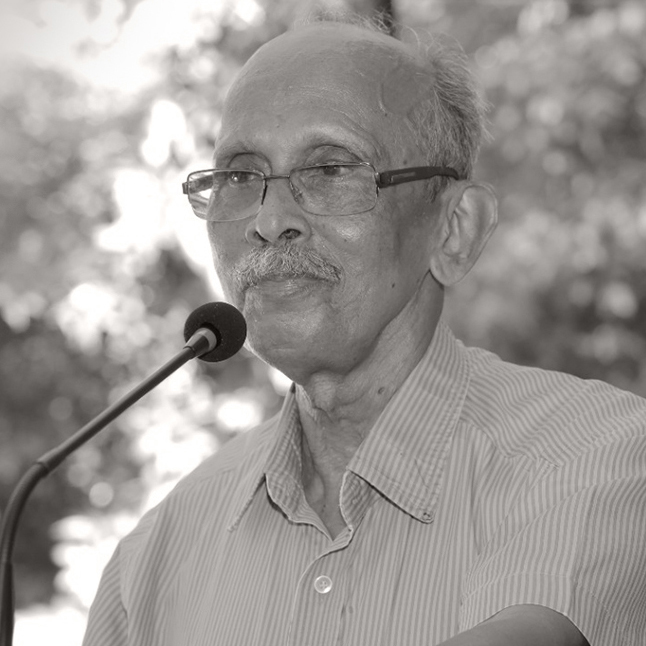
A Call to Courage — Not Comfort
(“Conference on Artificial Intelligence and Sustainability : Shaping the future Ahead” : ASIFA,2025-2026. Organised by ITM Skill University, Navi Mumbai—January 2026)
By Dr. K. M. George—Secretary General Global Millets Foundation; Former UN Professional—melmana@gmail.com
Opening: A World on the Edge of Its Next Beginning
Distinguished scholars, honoured ministers, venerable scientists, ambassadors of knowledge, custodians of public policy, guardians of our fields and forests, friends, colleagues, and seekers of a better world—
We gather today not as spectators of change, but as authors of destiny, summoned by a turning point so vast, so profound, so irreversible, that history itself will remember what we decide in this very age.
There are moments in the long story of humanity when the future pauses, waiting for courage.
Moments when civilisation must lift its eyes from the dust of routine and look again at the horizon of possibility.
Moments when the world does not ask for silence, but for voice;
not for comfort, but for courage.
This is such a moment.
For we stand today at the meeting point of two revolutions:
- The revolution of Artificial Intelligence,
- And the revolution of Climate-Resilient Agriculture — led by the humble, ancient, miraculous grains we call Millets.
One is born from code;
the other from soil.
One is the offspring of algorithms;
the other, the inheritance of our ancestors.
And yet, these two forces — one digital, one agricultural — are converging with the power to reshape human destiny.
This is not the world we inherited.
It is the world we must build.
- The Age When Algorithms Begin to Write History
My friends, the world is changing at a speed that mocks the calendars of government and the clocks of bureaucracy.
We meet at a time when:
- The map of agriculture is being redrawn by climate volatility.
- Economies tremble before invisible storms of data and disruption.
- Weather patterns drift away from predictability.
- Ancient cropping cycles lose their rhythm.
- Water tables sink like exhausted civilizations.
- Farmers stand on the land their forefathers cultivated — yet face decisions no generation before them ever imagined.
And above all, we meet at a time when AI has emerged not merely as a tool, but as the new architecture of human progress.
Let us state a truth plainly:
Artificial Intelligence has become the new nervous system of civilisation.
AI reads the skies more accurately than satellites of old.
AI predicts the rainfall before the monsoon whispers its intent.
AI identifies pests before the human eye can recognise distress.
AI anticipates market behaviour before economists finish their spreadsheets.
In our hospitals, AI detects kidney failure before symptoms whisper their warning.
In our cities, it manages traffic, monitors emissions, and guards public health.
In governance, it brings light where shadows once lived — exposing leakages, inefficiencies, corruption, and delay.
Yet, there is a deeper truth we must face with courage:
AI does not slow down for our comfort.
AI does not wait for policy.
AI does not pause for hesitation.
AI does not apologise for being faster than us.
If we do not lead this transformation, we shall be led by it.
If we do not shape this revolution, we shall be shaped by it.
If we do not rise to the challenge, the challenge will rise against us.
And in that rising, it will judge us.
- The World We Remember Is Gone — The World We Must Build Has No Precedent
For decades, we believed the future would be a gentle extension of the past.
That tomorrow would resemble yesterday, only with better machinery.
But the ground under our feet has shifted.
- Climate change has broken the rhythm of seasons.
- Desertification marches forward like a silent army.
- Floods and droughts now swing like pendulums carved by chaos.
- Food systems — once stable, once predictable — have become fragile.
Yet our policies, our ministries, our frameworks, our bureaucratic rituals still behave as though the world is analogue, slow, predictable, forgiving.
Let me say this with the solemnity of truth:
We live in a world governed by digital logic,
yet too often respond with analogue reflexes.
And therefore, we face a choice as old as civilisation:
- Courage or caution.
- Leadership or hesitation.
- The future or the past.
History is watching which we choose.
III. The Rise of Millets: The Ancient Answer to Humanity’s Newest Questions
But in this moment of uncertainty, the earth itself offers us an answer — an answer older than empires, older than kingdoms, older than the histories we teach in our schools.
That answer is Millets.
Millets — these humble, hardy, magnificent grains — are not merely crops.
They are civilizational allies.
They are the grains that fed the earliest cities.
The grains that strengthened the earliest armies.
The grains that sustained the earliest agricultural societies across Africa, Asia, Europe, and the Americas.
Millets do not fear drought.
Millets do not bow to heat.
Millets thrive where other crops surrender.
Millets nourish the body, renew the soil, respect the water, and sustain the poorest with dignity.
If there is a crop written into the DNA of human resilience —
if there is a grain that carries the whisper of ancient wisdom —
if there is a food that unites nutrition, ecology, climate resilience, and economic justice —
it is Millets.
And today, as climate change tightens its grip, as water scarcity deepens, as soil fertility declines, the world rediscovers what our ancestors always knew:
Millets are the future disguised as the past.
- When AI Meets Millets: A Partnership Worthy of Civilization
My friends, AI may be the brain of tomorrow,
but Millets are the heart of tomorrow.
And when the brain and the heart join hands,
civilisation rises.
AI and Millets together can remake the architecture of global agriculture.
They can weave a new story for food security.
They can turn vulnerable farmers into empowered entrepreneurs.
They can break the cycle of poverty that chains entire regions.
They can offer humanity a path to resilience amid climate chaos.
For consider what AI brings:
- AI maps millet-friendly regions with precision unseen in history.
- AI predicts yield fluctuations with uncanny accuracy.
- AI anticipates pest invasions weeks before they strike.
- AI guides farmers on soil health, water use, seed selection.
- AI connects remote farmers to global markets in real time.
- AI designs insurance models based on predictive risk, not political convenience.
And consider what Millets bring:
- Carbon sequestration.
- Water efficiency.
- Drought survival.
- Nutritional abundance.
- Digestive health.
- Soil restoration.
- Livelihood renewal.
- Cultural revival.
Millets and AI — one ancient, one modern — are complementary forces.
One gives strength; the other gives strategy.
One gives resilience; the other gives intelligence.
One gives survival; the other gives vision.
This is not merely agricultural reform.
This is civilizational engineering.
- A Global Awakening: What the Regions of the World Ask of Us
Across continents, across climates, across cultures, voices rise with different concerns — yet all look to AI and sustainable agriculture for answers.
South Asia asks:
“Can AI speak to farmers before it speaks to machines?”
Africa asks:
“Can AI serve where electricity is a visitor, not a resident?”
Latin America asks:
“Can AI protect forests before it protects forecasts?”
Europe asks:
“Can innovation outrun regulation without losing its soul?”
The Middle East asks:
“Can AI allocate water with justice in lands where every drop is fate?”
East Asia asks:
“Can algorithms preserve harmony in societies built on centuries of balance?”
Southeast Asia asks:
“Can AI predict disasters before disasters predict us?”
North America asks:
“Can democracy remain democratic when algorithms control attention?”
And in these global questions lies the great moral mandate of our time:
To build an AI future that is equitable, ethical, and accessible —
not a digital empire ruled by a few,
but a digital commons shared by all.
- The New Pillar of Sustainability: Digital Sustainability
We have long spoken of the three pillars of sustainability:
- Environmental
- Economic
- Social
But today, a fourth pillar has risen:
Digital Sustainability
For without
- data equity,
- digital access,
- transparent algorithms,
- rural connectivity,
- inclusive datasets,
- cultural representation,
- linguistic diversity,
the entire architecture of sustainability collapses.
AI must not be the privilege of the rich.
AI must not be the monopoly of corporations.
AI must not be the instrument of digital colonisation.
AI must be the public utility of the future —
a force that serves society, not subjugates it.
VII. Policy Paralysis: The Greatest Threat of Our Age
Let us be honest with ourselves.
Climate can be mitigated.
AI disruption can be mastered.
Agriculture can be transformed.
But policy paralysis —
the inability to decide, to act, to innovate —
this paralysis can erase decades of progress.
We cannot be a nation where:
- Farmers adopt AI tools faster than ministries adopt digital dashboards.
- Students learn AI online while universities still teach obsolete curricula.
- Innovation cycles run in weeks while approvals drag for years.
- The ground reality moves like a river but policy moves like a glacier.
Let me say it plainly:
If policy remains slow, AI will not save us.
AI will simply bypass us.
We must choose courage over caution.
Action over delay.
Vision over incrementalism.
VIII. A New Contract Between Knowledge and Power
In the world we are building:
- Research must not stay in journals.
- Policy must not stay in files.
- Technology must not stay in laboratories.
Knowledge must move.
Knowledge must breathe.
Knowledge must serve.
And policy must become:
- predictive,
- adaptive,
- evidence-led,
- data-driven,
- real-time,
- transparent.
The partnership between scholars and statesmen must become the new engine of civilisation.
For too long, research has climbed mountains while policy has taken the staircase.
In the AI era, both must fly.
- Ten Questions That Will Determine the Fate of Nations
- Can India build a National AI Grid for agriculture before climate chaos overtakes crop stability?
- Will data be democratized, or remain a bureaucratic fortress?
- Will AI uplift smallholders or enlarge corporate monopolies?
- Will rural India receive digital infrastructure worthy of the 21st century?
- Can governance shift from reactive to predictive?
- Will ethics outrun algorithms?
- Can ancient indigenous wisdom be digitized before it disappears?
- Will our universities reinvent themselves or fade into irrelevance?
- Can India lead the world in AI-enabled sustainability powered by Millets?
- Will policy makers choose courage — or caution?
For in this age:
AI rewards courage.
AI punishes hesitation.
- The Moral Architecture of Tomorrow
My friends, AI will shape our tools.
Millets will shape our survival.
But values will shape our civilisation.
We must therefore answer:
- What is progress without compassion?
- What is technology without justice?
- What is innovation without inclusion?
- What is growth without humanity?
- What is development without dignity?
We must build a future in which:
- Technology does not weaken human ties but strengthens them.
- Agriculture does not degrade the earth but regenerates it.
- Innovation does not divide societies but unites them.
- Growth does not exhaust nature but harmonises with it.
- AI does not erode identity but celebrates it.
- Digital power does not centralise authority but decentralises opportunity.
This is the ethical foundation of the architecture we must build.
- The Destiny of Millets: The Civilisation Crop of the Future
Allow me to speak from the core of conviction:
Millets are not a trend. They are a turning point.
They are the grain of the future wrapped in the humility of the past.
They are the food that answers the triple crisis of our time:
- the crisis of climate,
- the crisis of nutrition,
- the crisis of agriculture.
Millets can:
- reduce diabetes,
- combat malnutrition,
- nourish children,
- strengthen immunity,
- enhance metabolic health,
- offer gluten-free nourishment to millions.
Millets can:
- reduce water consumption by 70–80%,
- grow in degraded soils,
- survive heatwaves,
- withstand droughts,
- regenerate ecosystems.
Millets can:
- empower tribal communities,
- strengthen smallholders,
- support women farmers,
- build agri-entrepreneurs,
- revive forgotten economies.
And AI can be the wind beneath the wings of this revolution.
AI can turn Millets from survival crops into prosperity crops.
AI can turn Millets from old memories into global markets.
AI can turn Millets from local tradition into planetary nutrition.
This is why the Millet Movement is not a ministry program —
it is a civilizational renaissance.
XII. A Vision for India — And Through India, for the World
Let us envision an India where:
- Every farmer has an AI advisor in their pocket.
- Every field is mapped digitally.
- Every crop is monitored by intelligent sensors.
- Every child receives nutrition grounded in Millets.
- Every village is connected to the digital ecosystem.
- Every agricultural decision is evidence-based.
- Every drought is predicted before it becomes a tragedy.
- Every policy is guided by real-time data.
- Every community participates in the knowledge economy.
- Every citizen benefits from AI-enabled governance.
- Every school integrates AI literacy.
- Every region contributes to climate resilience.
- Every household consumes Millet products proudly.
An India that becomes the global lighthouse for:
- AI-enabled agriculture,
- climate-resilient crops,
- digital sustainability,
- ethical innovation.
An India that does not follow the future, but creates the future.
XIII. The Call That History Makes to Us
My friends, we are the generation that stands at the hinge of time.
Behind us is an age of struggle, scarcity, and manual toil.
Ahead of us is an age of intelligence, sustainability, and unprecedented possibility.
The question is not what AI will do.
The question is what we will do.
The question is not whether Millets can save agriculture.
The question is whether policy will rise to match the promise of Millets.
The question is not whether climate change will challenge us.
The question is whether courage will guide us.
This is our test.
This is our mandate.
This is our moment in history.
And let future generations say that in this moment, we did not shrink.
Let them say we were bold when comfort tempted us.
Let them say we were united when fear tried to divide us.
Let them say we were visionary when the world needed vision.
Let them say we rose to the height of our responsibility.
Let them say that when the earth trembled and the climate cried,
when technology surged and uncertainty darkened the sky,
we — the people of this era —
did not hide behind hesitation,
but chose courage.
XIV. Closing: A New Dawn for Humanity
Ladies and gentlemen,
The future will not be kind to those who wait.
It will not reward those who cling to the fading past.
It will not honour those who delay decisions.
But the future will embrace those who dare.
It will uplift those who innovate.
It will celebrate those who envision.
This is the moment to rise.
This is the moment to lead.
This is the moment to build.
A world where AI serves humanity.
A world where agriculture serves the planet.
A world where Millets serve civilisation.
A world where courage serves the future.
The world is watching.
History is listening.
The future is calling.
Let us answer not with whispers,
but with vision.
Not with hesitation,
but with action.
Not with fear,
but with courage worthy of this moment.
Thank you.
THE ARCHITECTURE OF TOMORROW
AI, Agriculture, and the Civilizational Rise of Millets
A Call to Courage — Not Comfort
(“Conference on Artificial Intelligence and Sustainability : Shaping the future Ahead” : ASIFA,2025-2026. Organised by ITM Skill University, Navi Mumbai—January 2026)
By Dr. K. M. George—Secretary General Global Millets Foundation; Former UN Professional—melmana@gmail.com
Opening: A World on the Edge of Its Next Beginning
Distinguished scholars, honoured ministers, venerable scientists, ambassadors of knowledge, custodians of public policy, guardians of our fields and forests, friends, colleagues, and seekers of a better world—
We gather today not as spectators of change, but as authors of destiny, summoned by a turning point so vast, so profound, so irreversible, that history itself will remember what we decide in this very age.
There are moments in the long story of humanity when the future pauses, waiting for courage.
Moments when civilisation must lift its eyes from the dust of routine and look again at the horizon of possibility.
Moments when the world does not ask for silence, but for voice;
not for comfort, but for courage.
This is such a moment.
For we stand today at the meeting point of two revolutions:
- The revolution of Artificial Intelligence,
- And the revolution of Climate-Resilient Agriculture — led by the humble, ancient, miraculous grains we call Millets.
One is born from code;
the other from soil.
One is the offspring of algorithms;
the other, the inheritance of our ancestors.
And yet, these two forces — one digital, one agricultural — are converging with the power to reshape human destiny.
This is not the world we inherited.
It is the world we must build.
- The Age When Algorithms Begin to Write History
My friends, the world is changing at a speed that mocks the calendars of government and the clocks of bureaucracy.
We meet at a time when:
- The map of agriculture is being redrawn by climate volatility.
- Economies tremble before invisible storms of data and disruption.
- Weather patterns drift away from predictability.
- Ancient cropping cycles lose their rhythm.
- Water tables sink like exhausted civilizations.
- Farmers stand on the land their forefathers cultivated — yet face decisions no generation before them ever imagined.
And above all, we meet at a time when AI has emerged not merely as a tool, but as the new architecture of human progress.
Let us state a truth plainly:
Artificial Intelligence has become the new nervous system of civilisation.
AI reads the skies more accurately than satellites of old.
AI predicts the rainfall before the monsoon whispers its intent.
AI identifies pests before the human eye can recognise distress.
AI anticipates market behaviour before economists finish their spreadsheets.
In our hospitals, AI detects kidney failure before symptoms whisper their warning.
In our cities, it manages traffic, monitors emissions, and guards public health.
In governance, it brings light where shadows once lived — exposing leakages, inefficiencies, corruption, and delay.
Yet, there is a deeper truth we must face with courage:
AI does not slow down for our comfort.
AI does not wait for policy.
AI does not pause for hesitation.
AI does not apologise for being faster than us.
If we do not lead this transformation, we shall be led by it.
If we do not shape this revolution, we shall be shaped by it.
If we do not rise to the challenge, the challenge will rise against us.
And in that rising, it will judge us.
- The World We Remember Is Gone — The World We Must Build Has No Precedent
For decades, we believed the future would be a gentle extension of the past.
That tomorrow would resemble yesterday, only with better machinery.
But the ground under our feet has shifted.
- Climate change has broken the rhythm of seasons.
- Desertification marches forward like a silent army.
- Floods and droughts now swing like pendulums carved by chaos.
- Food systems — once stable, once predictable — have become fragile.
Yet our policies, our ministries, our frameworks, our bureaucratic rituals still behave as though the world is analogue, slow, predictable, forgiving.
Let me say this with the solemnity of truth:
We live in a world governed by digital logic,
yet too often respond with analogue reflexes.
And therefore, we face a choice as old as civilisation:
- Courage or caution.
- Leadership or hesitation.
- The future or the past.
History is watching which we choose.
III. The Rise of Millets: The Ancient Answer to Humanity’s Newest Questions
But in this moment of uncertainty, the earth itself offers us an answer — an answer older than empires, older than kingdoms, older than the histories we teach in our schools.
That answer is Millets.
Millets — these humble, hardy, magnificent grains — are not merely crops.
They are civilizational allies.
They are the grains that fed the earliest cities.
The grains that strengthened the earliest armies.
The grains that sustained the earliest agricultural societies across Africa, Asia, Europe, and the Americas.
Millets do not fear drought.
Millets do not bow to heat.
Millets thrive where other crops surrender.
Millets nourish the body, renew the soil, respect the water, and sustain the poorest with dignity.
If there is a crop written into the DNA of human resilience —
if there is a grain that carries the whisper of ancient wisdom —
if there is a food that unites nutrition, ecology, climate resilience, and economic justice —
it is Millets.
And today, as climate change tightens its grip, as water scarcity deepens, as soil fertility declines, the world rediscovers what our ancestors always knew:
Millets are the future disguised as the past.
- When AI Meets Millets: A Partnership Worthy of Civilization
My friends, AI may be the brain of tomorrow,
but Millets are the heart of tomorrow.
And when the brain and the heart join hands,
civilisation rises.
AI and Millets together can remake the architecture of global agriculture.
They can weave a new story for food security.
They can turn vulnerable farmers into empowered entrepreneurs.
They can break the cycle of poverty that chains entire regions.
They can offer humanity a path to resilience amid climate chaos.
For consider what AI brings:
- AI maps millet-friendly regions with precision unseen in history.
- AI predicts yield fluctuations with uncanny accuracy.
- AI anticipates pest invasions weeks before they strike.
- AI guides farmers on soil health, water use, seed selection.
- AI connects remote farmers to global markets in real time.
- AI designs insurance models based on predictive risk, not political convenience.
And consider what Millets bring:
- Carbon sequestration.
- Water efficiency.
- Drought survival.
- Nutritional abundance.
- Digestive health.
- Soil restoration.
- Livelihood renewal.
- Cultural revival.
Millets and AI — one ancient, one modern — are complementary forces.
One gives strength; the other gives strategy.
One gives resilience; the other gives intelligence.
One gives survival; the other gives vision.
This is not merely agricultural reform.
This is civilizational engineering.
- A Global Awakening: What the Regions of the World Ask of Us
Across continents, across climates, across cultures, voices rise with different concerns — yet all look to AI and sustainable agriculture for answers.
South Asia asks:
“Can AI speak to farmers before it speaks to machines?”
Africa asks:
“Can AI serve where electricity is a visitor, not a resident?”
Latin America asks:
“Can AI protect forests before it protects forecasts?”
Europe asks:
“Can innovation outrun regulation without losing its soul?”
The Middle East asks:
“Can AI allocate water with justice in lands where every drop is fate?”
East Asia asks:
“Can algorithms preserve harmony in societies built on centuries of balance?”
Southeast Asia asks:
“Can AI predict disasters before disasters predict us?”
North America asks:
“Can democracy remain democratic when algorithms control attention?”
And in these global questions lies the great moral mandate of our time:
To build an AI future that is equitable, ethical, and accessible —
not a digital empire ruled by a few,
but a digital commons shared by all.
- The New Pillar of Sustainability: Digital Sustainability
We have long spoken of the three pillars of sustainability:
- Environmental
- Economic
- Social
But today, a fourth pillar has risen:
Digital Sustainability
For without
- data equity,
- digital access,
- transparent algorithms,
- rural connectivity,
- inclusive datasets,
- cultural representation,
- linguistic diversity,
the entire architecture of sustainability collapses.
AI must not be the privilege of the rich.
AI must not be the monopoly of corporations.
AI must not be the instrument of digital colonisation.
AI must be the public utility of the future —
a force that serves society, not subjugates it.
VII. Policy Paralysis: The Greatest Threat of Our Age
Let us be honest with ourselves.
Climate can be mitigated.
AI disruption can be mastered.
Agriculture can be transformed.
But policy paralysis —
the inability to decide, to act, to innovate —
this paralysis can erase decades of progress.
We cannot be a nation where:
- Farmers adopt AI tools faster than ministries adopt digital dashboards.
- Students learn AI online while universities still teach obsolete curricula.
- Innovation cycles run in weeks while approvals drag for years.
- The ground reality moves like a river but policy moves like a glacier.
Let me say it plainly:
If policy remains slow, AI will not save us.
AI will simply bypass us.
We must choose courage over caution.
Action over delay.
Vision over incrementalism.
VIII. A New Contract Between Knowledge and Power
In the world we are building:
- Research must not stay in journals.
- Policy must not stay in files.
- Technology must not stay in laboratories.
Knowledge must move.
Knowledge must breathe.
Knowledge must serve.
And policy must become:
- predictive,
- adaptive,
- evidence-led,
- data-driven,
- real-time,
- transparent.
The partnership between scholars and statesmen must become the new engine of civilisation.
For too long, research has climbed mountains while policy has taken the staircase.
In the AI era, both must fly.
- Ten Questions That Will Determine the Fate of Nations
- Can India build a National AI Grid for agriculture before climate chaos overtakes crop stability?
- Will data be democratized, or remain a bureaucratic fortress?
- Will AI uplift smallholders or enlarge corporate monopolies?
- Will rural India receive digital infrastructure worthy of the 21st century?
- Can governance shift from reactive to predictive?
- Will ethics outrun algorithms?
- Can ancient indigenous wisdom be digitized before it disappears?
- Will our universities reinvent themselves or fade into irrelevance?
- Can India lead the world in AI-enabled sustainability powered by Millets?
- Will policy makers choose courage — or caution?
For in this age:
AI rewards courage.
AI punishes hesitation.
- The Moral Architecture of Tomorrow
My friends, AI will shape our tools.
Millets will shape our survival.
But values will shape our civilisation.
We must therefore answer:
- What is progress without compassion?
- What is technology without justice?
- What is innovation without inclusion?
- What is growth without humanity?
- What is development without dignity?
We must build a future in which:
- Technology does not weaken human ties but strengthens them.
- Agriculture does not degrade the earth but regenerates it.
- Innovation does not divide societies but unites them.
- Growth does not exhaust nature but harmonises with it.
- AI does not erode identity but celebrates it.
- Digital power does not centralise authority but decentralises opportunity.
This is the ethical foundation of the architecture we must build.
- The Destiny of Millets: The Civilisation Crop of the Future
Allow me to speak from the core of conviction:
Millets are not a trend. They are a turning point.
They are the grain of the future wrapped in the humility of the past.
They are the food that answers the triple crisis of our time:
- the crisis of climate,
- the crisis of nutrition,
- the crisis of agriculture.
Millets can:
- reduce diabetes,
- combat malnutrition,
- nourish children,
- strengthen immunity,
- enhance metabolic health,
- offer gluten-free nourishment to millions.
Millets can:
- reduce water consumption by 70–80%,
- grow in degraded soils,
- survive heatwaves,
- withstand droughts,
- regenerate ecosystems.
Millets can:
- empower tribal communities,
- strengthen smallholders,
- support women farmers,
- build agri-entrepreneurs,
- revive forgotten economies.
And AI can be the wind beneath the wings of this revolution.
AI can turn Millets from survival crops into prosperity crops.
AI can turn Millets from old memories into global markets.
AI can turn Millets from local tradition into planetary nutrition.
This is why the Millet Movement is not a ministry program —
it is a civilizational renaissance.
XII. A Vision for India — And Through India, for the World
Let us envision an India where:
- Every farmer has an AI advisor in their pocket.
- Every field is mapped digitally.
- Every crop is monitored by intelligent sensors.
- Every child receives nutrition grounded in Millets.
- Every village is connected to the digital ecosystem.
- Every agricultural decision is evidence-based.
- Every drought is predicted before it becomes a tragedy.
- Every policy is guided by real-time data.
- Every community participates in the knowledge economy.
- Every citizen benefits from AI-enabled governance.
- Every school integrates AI literacy.
- Every region contributes to climate resilience.
- Every household consumes Millet products proudly.
An India that becomes the global lighthouse for:
- AI-enabled agriculture,
- climate-resilient crops,
- digital sustainability,
- ethical innovation.
An India that does not follow the future, but creates the future.
XIII. The Call That History Makes to Us
My friends, we are the generation that stands at the hinge of time.
Behind us is an age of struggle, scarcity, and manual toil.
Ahead of us is an age of intelligence, sustainability, and unprecedented possibility.
The question is not what AI will do.
The question is what we will do.
The question is not whether Millets can save agriculture.
The question is whether policy will rise to match the promise of Millets.
The question is not whether climate change will challenge us.
The question is whether courage will guide us.
This is our test.
This is our mandate.
This is our moment in history.
And let future generations say that in this moment, we did not shrink.
Let them say we were bold when comfort tempted us.
Let them say we were united when fear tried to divide us.
Let them say we were visionary when the world needed vision.
Let them say we rose to the height of our responsibility.
Let them say that when the earth trembled and the climate cried,
when technology surged and uncertainty darkened the sky,
we — the people of this era —
did not hide behind hesitation,
but chose courage.
XIV. Closing: A New Dawn for Humanity
Ladies and gentlemen,
The future will not be kind to those who wait.
It will not reward those who cling to the fading past.
It will not honour those who delay decisions.
But the future will embrace those who dare.
It will uplift those who innovate.
It will celebrate those who envision.
This is the moment to rise.
This is the moment to lead.
This is the moment to build.
A world where AI serves humanity.
A world where agriculture serves the planet.
A world where Millets serve civilisation.
A world where courage serves the future.
The world is watching.
History is listening.
The future is calling.
Let us answer not with whispers,
but with vision.
Not with hesitation,
but with action.
Not with fear,
but with courage worthy of this moment.
Thank you.