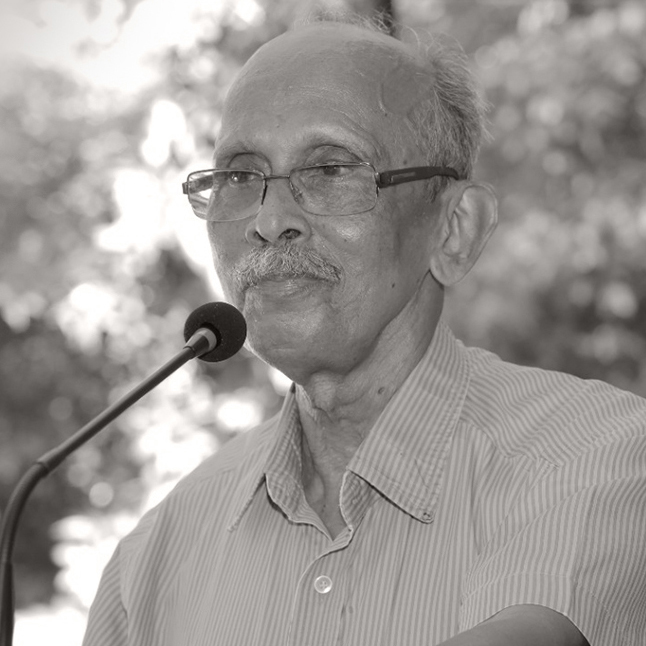
By Dr K M George, CEO — Sustainable Development Forum, and Former UN Professional
A Tale of Two Visions
The clash that Zohran Mamdani’s stunning victory in New York sets up is not one of civilisations — East against West, immigrant versus native — but rather one of competing visions of the world. On one side stands the angry nationalist project inspired by Trumpian populism, steeped in nostalgia for an imagined past of borders and exclusion. On the other stands a cosmopolitan, global-city vision that embraces diversity, mobility, and interconnectedness.
In that light, Mamdani’s triumph is more than a city election; it is a profound statement about where the moral and political imagination of America might be heading. It is also, symbolically, one of the first major blows to the nationalist populism that dominated US politics for nearly a decade.
Here was a man — a 32-year-old son of Ugandan immigrants of Indian origin, a former rapper, and the first Muslim and first South Asian to become Mayor of New York — defeating powerful establishment figures such as former Governor Andrew Cuomo. In doing so, he delivered a jolt to the American political psyche and an unmistakable message to Washington, D.C.
The Message to Washington and Trump
The reverberations of Mamdani’s victory will travel far beyond the Hudson River. To Washington’s corridors of power, it signals that the American electorate, especially its urban and younger segments, is yearning for an alternative to the politics of anger, division, and fear.
To Donald Trump and his movement, it is an unmistakable sign of resistance. Trump’s America has been built on defining outsiders — immigrants, minorities, dissenters — as threats to national identity. Mamdani, the very embodiment of those “outsiders,” has now become the face of the United States’ greatest metropolis. The optics are impossible to ignore.
In Trump’s vision, non-citizens risk detention or deportation for acts of speech; in Mamdani’s, a young immigrant’s son can rise through democracy to lead the most dynamic city in the world. This is America’s paradox: the same system that once enabled populism now offers a counter-narrative of inclusion and hope.
Whether this marks the beginning of the decline of the Trump era is uncertain. But symbolically, it is one of the first major cracks in that wall — a declaration that the future belongs to those who can inspire, not incite.
The Anatomy of a “Global-City” Revolution
Mamdani’s rise was not accidental. It was built on three interlocking elements:
- Grassroots mobilisation — His campaign relied on thousands of volunteers, small donations, and relentless local engagement rather than big-money donors or corporate lobbies.
- Bread-and-butter politics — Rather than focus on abstract ideology, Mamdani emphasised housing, rent control, affordable transport, and public education — issues that cut across communities.
- Cultural authenticity — He did not hide his immigrant roots or his faith; instead, he made them the core of his public narrative. In doing so, he turned what was once seen as a liability into an asset.
The campaign resonated with voters weary of elitist politics. It was urban, inclusive, and hopeful — a clear contrast to Trump’s politics of grievance.
The Rebirth of the Democratic Left
For the Democratic Party, Mamdani’s victory is both a tonic and a test. It injects fresh energy into a fatigued establishment often accused of being out of touch with working-class and minority voters. His win, alongside progressive gains in other cities, suggests that the future of the Democratic Party may rest less on Wall Street and more on Main Street.
Yet, it also exposes the fault lines within the party. The progressive wing will see in Mamdani a new standard-bearer; the centrist leadership may fear that his radical housing and tax proposals could alienate moderates and donors.
Still, history reminds us that political rejuvenation often begins at the margins. In the 1930s, Franklin D. Roosevelt’s “New Deal” emerged from the ruins of the Great Depression. Today, America faces a different crisis — one of inequality, alienation, and distrust in democracy. Mamdani’s ascent could become the harbinger of a new civic renewal, one that speaks to both moral conviction and material need.
For Republicans, a Warning from the Cities
If Democrats should celebrate cautiously, Republicans should worry deeply. Mamdani’s success underscores the GOP’s deepening alienation from urban America. The party that once claimed to represent small businesses and family values now finds itself reduced to a rural-suburban stronghold, increasingly dependent on grievance rather than governance.
While Trumpism may continue to dominate rural electorates, the future of the American economy — and therefore its political future — lies in cities like New York, Los Angeles, and Chicago. The Republican inability to speak credibly to these cosmopolitan constituencies could soon become a structural handicap.
For the Trump campaign, the optics of a Muslim mayor leading New York will be used to stoke fear among hardliners. But if that fear no longer sells, it may signal the waning power of nationalist populism itself.
Between City Hall and the White House: Looming Friction
The months ahead are likely to witness a tense relationship between City Hall and Washington. Should Mamdani pursue his proposed agenda — rent freezes, free public transport, progressive taxation, climate-resilient infrastructure — friction with federal authorities will be inevitable, particularly if the next administration remains conservative or centrist.
Key flashpoints will include:
- Federal funding for housing and climate projects
- Immigration enforcement and sanctuary-city policies
- Policing and public safety
- Taxation and corporate regulation
New York has often served as the laboratory of America’s political future. Under Mamdani, it could become the testing ground for a new urban model — one that places inclusivity and sustainability above profit and partisanship.
Beyond America: The Global Democratic Lesson
Mamdani’s victory is not merely an American story. It holds valuable lessons for democracies across the Global North struggling with populism, stagnation, and inequality.
From London to Berlin, Toronto to Paris, and indeed from Delhi to São Paulo, politics has become trapped in a binary between cosmopolitan progressives and nationalist revivalists. Mamdani’s rise shows that the answer may not lie in choosing between the two, but in integrating the best of both: rootedness in community and openness to the world.
For Europe, particularly within NATO’s democracies, the implications are profound. The trans-Atlantic alliance has long been defined by elite consensus — often disconnected from the everyday struggles of citizens. A new generation of leaders like Mamdani could shift that equation by bringing to the table issues such as climate justice, affordable housing, and inclusive urban policy as integral to democratic resilience.
The Writing on the Wall: Ten Lessons for Political Strategists
- Global cities are the new political laboratories.
Urban populations are diverse, connected, and pragmatic. They demand governance, not slogans. Political parties that fail to adapt to urban realities will fade into irrelevance. - Identity and inclusion can be assets, not threats.
Mamdani’s background — Muslim, immigrant, young — was once seen as unelectable. His victory proves that authenticity, empathy, and competence can transcend prejudice. - Grassroots mobilisation outperforms moneyed politics.
The campaign relied on small donors and volunteer energy. In a world of digital activism, passion and participation can outweigh PACs and lobbyists. - Policy substance matters again.
Voters are tired of culture wars. Mamdani’s focus on rent, transport, and climate showed that grounded issues win elections. - The youth vote is decisive.
America’s younger generation, disillusioned with both parties, seeks meaning and fairness. Any political movement that ignores them does so at its peril. - Diversity and democracy are intertwined.
When governance reflects the faces and voices of its people, democracy renews itself. When it excludes, cynicism and authoritarianism follow. - The global-city ethos challenges nationalist populism.
Cities embody interdependence — of trade, migration, and ideas. Nationalism that thrives on fear cannot easily coexist with such reality. - Business-politics relations must evolve.
Wall Street’s unease with Mamdani mirrors a wider global anxiety among elites about redistributive policies. But ignoring inequality is no longer viable. Reform is inevitable. - Polarisation will intensify before it eases.
Every progressive breakthrough provokes backlash. Managing the next phase of American politics will require balance, patience, and moral clarity. - Democracy’s renewal depends on empathy.
The ultimate lesson of Mamdani’s victory is that voters crave leaders who listen. The politics of empathy — grounded in daily struggle and shared destiny — is democracy’s best defence against its enemies.
A Trans-Atlantic Lens: Implications for NATO and Beyond
Even within trans-Atlantic circles, Mamdani’s rise carries geopolitical meaning. It signals that America’s moral authority, long tarnished by wars abroad and inequality at home, can be rebuilt through inclusion and justice rather than dominance.
In a NATO environment dominated by security concerns, a leader like Mamdani represents a shift from “hard power” to “human power” — soft diplomacy rooted in cultural pluralism. His worldview, shaped by Kampala and Queens alike, could help re-humanise the idea of democracy for the Global South, where Western preaching often rings hollow.
If the United States can produce mayors like Mamdani, Europe might rediscover its own moral compass through mayors and local leaders who place citizens above systems. The Atlantic community, long the guardian of democratic ideals, needs precisely this infusion of authenticity.
A Generational Turn: From Fear to Faith
What makes Mamdani’s triumph extraordinary is not just his personal story but what it represents generationally. America’s younger citizens are rejecting fear-based politics. They are impatient with the hypocrisy of parties that speak of freedom while enabling inequality, or that invoke faith while denying compassion.
In Mamdani, they see not a saviour but a symbol — a reminder that democracy, however imperfect, can still surprise us. His win shows that idealism, when grounded in community and competence, can still defeat cynicism.
This generational turn carries global resonance. From France’s student-led climate movements to Chile’s constitutional reformers, young citizens are reclaiming politics from corporate lobbies and nationalist demagogues alike. Mamdani’s victory belongs to that family of awakenings.
The Trump Era: A Waning Shadow
Every political era eventually faces its reckoning. The Trump project — nationalist, anti-globalist, and anti-immigrant — reached its peak by promising to make America “great again.” Mamdani’s election may one day be remembered as the moment America began to define greatness differently: not as dominance, but as decency.
Yet, no era ends without turbulence. Trumpism will not vanish overnight; it may retreat, regroup, and re-emerge in new guises. But its moral legitimacy has been dented. If an immigrant’s son, a Muslim progressive, can win New York by championing fairness over fear, then the myth that populism is unstoppable has been broken.
A Mirror for Democracies Everywhere
For democracies across the Global North, the message is unmistakable. Inequality, exclusion, and fatigue have eroded faith in democratic institutions. But renewal is possible — if politics can once again align morality with policy.
Mamdani’s victory is a parable of that renewal: that hope can still be electorally viable, that diversity can still be strength, and that empathy can still outlast anger.
As an observer of governance across Asia, Africa, and the Pacific over five decades, I have seen how societies decay when the powerful stop listening. America, with all its resources and contradictions, remains capable of self-correction — provided it listens to its cities, its youth, and its conscience.
Conclusion: The Writing on the Wall
The thumping victory of Zohran Mamdani in New York City is more than an upset; it is a historic punctuation mark in the evolving grammar of democracy. It tells Washington that power can flow upward from the grassroots, not merely downward from dynasties. It tells the world that even amid division, the human spirit’s desire for justice and belonging endures.
For Trumpism, it is a cautionary note. For Democrats, a moment of reckoning. For America, a reminder of its unfinished promise. And for the Global North’s democracies — from Brussels to Ottawa — it is the writing on the wall: the age of anger is giving way to the politics of empathy.
Dr K M George is CEO of the Sustainable Development Forum, Secretary-General of the Global Millets Foundation, and a former UN professional who has travelled to over 15,000 villages worldwide for the UNDP, FAO, UNOPS, and ADB. He writes on global governance, democracy, and sustainable futures (.http;//drkmgeorge.com)