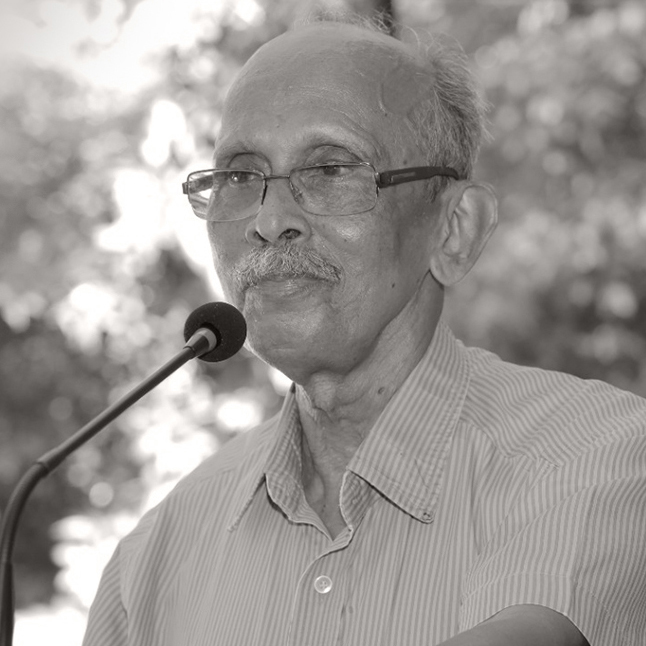
(Dr. KM George, CEO Sustainable Development Forum& former FAO Team Leader in Afghanistan)
Executive Summary
As FAO celebrates its 80th anniversary and honours a new cohort of 28 heritage agricultural systems across 14 countries—bringing the total globally recognised agricultural heritage sites to 102 in 29 countries — there is both a moment of celebration and a moment of responsibility. These heritage systems remind us that small-scale farmers, drawing on centuries of labour, knowledge and place-based adaptation, are at the heart of food security, biodiversity, rural resilience and cultural identity.
Yet too often, programmes remain in conference rooms in Rome or capital cities, while the farmer who tills the land—who faces erratic weather, climate shocks, market instability and policy neglect—sees little return, little dignity and little resilience. The recent cyclone damage to standing crops in Andhra Pradesh and elsewhere provides a clear warning that we must move from recognition to grass-roots interventions that enable small farmers to realise value and resilience.
This policy paper calls on agriculture ministers and FAO to adopt ten concrete recommendations that will reshape the narrative: from heritage as an academic or tourist badge to heritage as a living, remunerative, dignified pathway for farmers and their landscapes.
Background & Rationale
The GIAHS concept, launched by FAO in 2002, is built on the recognition of agricultural systems that are living co-evolutions of communities and their environment—systems that conserve biodiversity, knowledge systems, resilient ecosystems, and cultural values while providing food and livelihoods. Such systems serve as “benchmarks” for sustainable agriculture and rural development.
The fact that 102 systems across 29 countries are now recognised underscores how widespread and significant this heritage is. But designation alone does not guarantee the farmer families who steward these systems are rewarded, nor does it guarantee replication or scaling of the dynamics for other farming families who are battling adverse weather, poor access to markets or finance, land degradation and policy neglect.
In many countries, small-holder farmers are literally on the front line: they deal with increasingly extreme weather (such as cyclones, floods, droughts), degradation of resources, stronger market and trade competition, and erosion of traditional knowledge. For example, in parts of India (such as Andhra Pradesh), standing crops were heavily damaged by a recent cyclone, underlining the urgency of building resilience and offering assured returns to farmers.
Agricultural heritage systems can offer pathways: they embody resilience, diversified cropping or land use, traditional water and soil management, agro-ecological design, community organisations and local value chains. However, research shows persistent weaknesses: weak monitoring, insufficient legal/institutional support, inadequate financial incentives, and low stakeholder participation.
This policy paper proposes to shift from using GIAHS merely as recognition to using it as platforms for transformative action for small and marginalised farmers, thereby making real dent in food-security, farmer incomes and resilience. Cutting-edge interventions should combine agronomy, ecology, markets, community governance and finance.
Policy Recommendations
Below are ten recommendations for FAO and national agriculture ministries to adopt (with adaptation to local context) for the cut-off period of end of 2023 and beyond, to drive tangible returns to farmers and resilience in heritage and non-heritage systems alike.
- Farmers as Service-Providers and Value-Beneficiaries
Recognise farmers not just as producers, but as providers of ecosystem services, biodiversity custodians and cultural heritage stewards. Establish payment-for-ecosystem-services (PES) schemes that reward farmers in designated heritage systems—and by extension non-heritage systems willing to adopt heritage-inspired practices—for biodiversity maintenance, soil and water conservation, agro-ecosystem health and carbon sequestration. The GIAHS framework emphasises this in principle but in practice many farmers have received limited economic return from their heritage custodianship.
Ministries should design national schemes where farmers receive predictable, regular payments (quarterly or yearly) tied to verifiable ecosystem or heritage service outcomes rather than once-off grants. This will anchor the farmer’s dignity, income security and motivation.
- Dynamic Conservation & Adaptive Management with Local Governance
Heritage farming systems are not static museum-pieces; they evolve. The GIAHS programme emphasises “dynamic conservation” — i.e., the capacity to adapt while conserving core values. Ministries should mandate, at site and district level, heritage-management committeescomprised of farmers, local government, extension agents, researchers and civil society. These committees should monitor adaptation of the system (for example to climate change or market shifts), make local adjustments and ensure farmer voice. Empower these committees with modest budgets to pilot innovations and respond to weather shocks or pest outbreaks. - Assured Market Access and Premium Branding for Heritage & Resilient Crops
One major gap for many small farmers is market access and value capture. Heritage systems often produce niche, high-value crops, agro-forestry products, or fine-landscape goods (e.g., terraced orchards, heritage rice, specialty lemons like Amalfi etc). Ministries should partner with FAO and marketing agencies to develop heritage-brand certification, quality standards, traceability and premium price structures (domestic and export). This includes support for cooperatives or farmer producer organisations (FPOs) in heritage zones. The assured return must be visible to the farmer. - Insurance and Weather-Shock Resilience Fund for Heritage Farmers
Farmers in heritage systems often face extreme weather (cyclones, floods, droughts) and yet carry responsibility for land stewardship. A dedicated heritage-farmer resilience fundshould be established in each country (or region) to provide rapid relief, replanting subsidies, and risk-insurance support (perhaps via parametric insurance) for farmers in heritage zones (and by extension for vulnerable small-holders in other areas). This fund should be triggered by defined weather/climate events and cover livelihood interruption, crop loss and restoration of heritage practices. - Knowledge Systems Revitalisation and Extension Support
The GIAHS framework emphasises knowledge systems, traditional technologies and social organisation as core criteria. Ministries must invest in documenting traditional practices, training younger farmers in heritage techniques (terracing, agro-forestry, water-harvesting, multi-cropping, inter-cropping, agro-pastoralism), and embedding them in extension programmes. Deploy mobile digital tools (apps, geo-tagging, video tutorials) and local knowledge hubs to share best practices between heritage sites and other rural areas. - Monitoring, Indicator Systems and Legal Recognition
One major challenge identified in literature is lack of standardised monitoring systems, insufficient legal/institutional support and inadequate incentives. FAO should, with ministries, develop a minimum core indicator set(for example: biodiversity indices, soil health, water management efficiency, farmer income, market access, community governance metrics) and require annual reporting by heritage-zone committees. National governments should embed heritage-site governance in law or regulation, ensuring regular monitoring, data collection and accountability. - Scaling and Out-Scaling Heritage-Inspired Models Beyond Recognised Sites
While the 102 designated systems are valuable, the objective must be to learn from them and replicatetheir resilient, diversified, low-input, biodiversity-rich models across other regions. Ministries should identify “heritage-inspired demonstration zones” outside the designated sites, and promote policy incentives for farmers who adopt heritage practices (for example terrace farming, agro-forestry, integrated cropping-livestock systems, agro-tourism). This will magnify impact on food security, livelihoods and climate resilience across millions of hectares. - Financial Incentives, Value Chain Development and Rural Entrepreneurship
Beyond direct payments, ministries must incentivise rural entrepreneurs and farmers in heritage zones by offering low-interest heritage-investment loans, fiscal incentives (tax breaks, subsidies for processing equipment), and seed-capital for cooperatives developing value-added products (heritage crops, agro-tourism, eco-services). This will create multiplier effects: farmers become suppliers, processors, entrepreneurs in their own communities. - Integrating Heritage Farming into National Food-Security Planning
Heritage systems are not side-shows; they should be mainstreamed into national food security and rural development strategies. Ministries must integrate heritage-site production (and heritage-inspired zones) into national projections of food supply, climate adaptation funds, and rural poverty alleviation programmes. Use heritage systems as living laboratoriesto test climate-smart, low-input, high-resilience farming that can feed marginalised populations. - Visibility, Recognition and Farmer-centric Metrics of Success
Ministries and FAO must redress the imbalance wherein conferences, proclamations and global awards garner headlines, but farmers in the field feel invisible. Success metrics should shift from numberof heritage sites designated to number of farming families whose incomes rose, whose livelihoods are more resilient, whose dignity is affirmed. Annual public reporting should highlight farmer-centric stories, income gains, reduced risk from weather events, and improved biodiversity and ecosystem service outcomes. Heritage awards and ceremonies are important—but the real celebration must be at the field level, by and for farmers.
Implementation Road-map (2023 cut-off period to start)
- By end 2023: Ministries commit to appointing heritage-site governance committees; identify heritage farms and zones; allocate seed budget for PES schemes; map heritage sites and vulnerable cropping zones (e.g., cyclone-prone areas) for resilience fund coverage.
- 2024: Launch pilot heritage-farmer PES schemes; establish resilience fund; pilot heritage-brand certification programmes; document traditional practices and train local extension agents; develop core indicator system and annual reporting templates.
- 2025: Scale up PES to all designated heritage zones; extend heritage-inspired demonstration zones; roll out low-interest loans/investment incentives; integrate heritage systems into national food security and climate adaptation strategy; publish first heritage-farmer-centric annual impact report.
- By 2030: Heritage-inspired models adopted in a major portion of small-holder systems; measurable improvements in food security, farmer income, climate resilience; heritage systems celebrated as mainstream farming rather than niche; active replication across geographies.
Expected Outcomes & Returns for Farmers and Food Security
- Farmers in heritage zones gain predictable income from PES schemes and premiums on heritage‐branded products.
- Farmers’ exposure to climate shocks is reduced via resilience fund and adaptive heritage governance.
- Biodiversity, soil health and ecosystem services are enhanced, contributing to long-term sustainability.
- Value chains develop locally, generating rural employment and reducing dependence on external input-intensive models.
- Heritage systems supply food and nutritional security, particularly in marginal rural areas, and act as climate-smart models for small-holder farming.
- National governments achieve multiple goals: rural poverty alleviation, climate adaptation, biodiversity conservation, food security and cultural heritage preservation.
Conclusion
The upcoming GIAHS Award Ceremony is a symbolic milestone: 102 agricultural heritage systems in 29 countries now bear recognition. But the real test lies not in the number of recognitions, nor in the number of meetings held in capitals, but in whether those farmers on the ground—ploughing, sowing, protecting, adapting—feel that their labour, their heritage, and their dignity are recognised, rewarded, and protected.
Ministries and FAO must shift from talk to action: from heritage as label to heritage as living, remunerative, resilient farming. The ten recommendations above provide a blueprint. If we implement them with sincerity—from Rome to region, from capital to field—then heritage becomes livelihoods, resilience becomes reality, and food security becomes grounded in the wisdom of farmers themselves.
For small-scale farmers are not only our custodians of agricultural heritage—they are our best hope for a sustainable, equitable, climate-resilient food future.
References
Food and Agriculture Organization of the United Nations. “About GIAHS: Combining agricultural biodiversity, resilient ecosystems, traditional farming practices and cultural identity.” Available at FAO website
Food and Agriculture Organization of the United Nations. “Background: Globally Important Agricultural Heritage Systems (GIAHS)”.
Song, H., Chen, P., Zhang, Y. & Chen, Y. “Study Progress of Important Agricultural Heritage Systems (IAHS): A Literature Analysis.” Sustainability, 2021. Zhang, Y. et al. “A Review of the Progress in Globally Important Agricultural Heritage Systems.” Sustainability, 2022.
K.M. GEORGE Ph.D.
Secretary General of Global Millets Foundation & President of Sustainable Development Forum
(Formerly Chief of Monitoring and Evaluation , Government of Papua New Guinea; World Bank Monitoring & Evaluation Advisor to Govt. of Afghanistan; FAO Team Leader in Afghanistan; Consultant to ADB, UNDP, UNOPS, UNWOMEN — in Rwanda, South Sudan and North Korea)