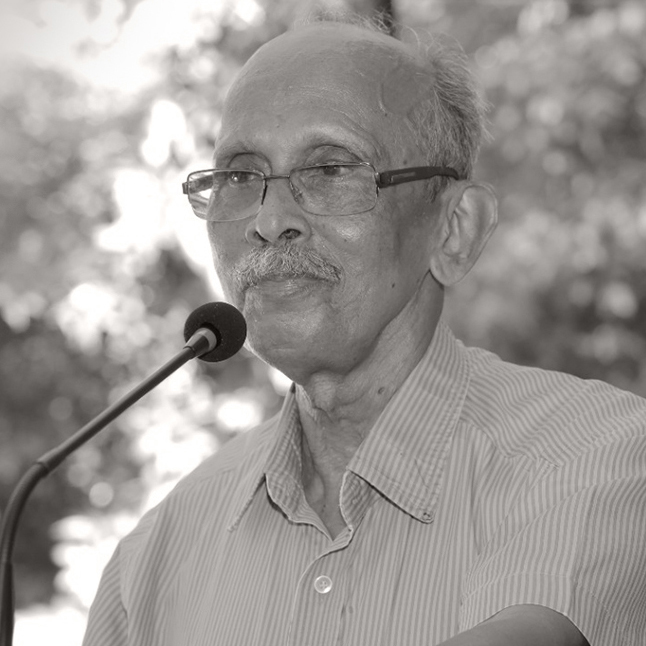
Addressed with respect to the Hon’ble Chief Minister of Tamil Nadu,
Thiru C. Joseph Vijay
By
Dr K. M. George
Former United Nations Professional, Former FAO Team Leader, Afghanistan, Former IFAD Mission Professional, DPR Korea, Former UNDP Professional, India, Former UN Women Professional, South Sudan, Development and Microfinance Practitioner, Secretary-General, Global Millets Foundation, CEO, Sustainable Development Forum
melmana@gmail.com | +91 99476 70887
Hon’ble Chief Minister,
I am writing this paper not as a political commentator, nor as a member of any political party, but as a development practitioner who has spent more than five decades observing how governments succeed, how they fail, and, more importantly, why otherwise good policies sometimes fail when they meet the realities of ordinary people.
I have had the privilege — and sometimes the burden — of working with people in some of the most difficult development environments imaginable. I have worked in India and abroad, including with FAO in Afghanistan, with IFAD in the Democratic People’s Republic of Korea, with UNDP in India and with UN Women in South Sudan. I have also worked with banking institutions, rural communities, microfinance programmes and development agencies.
I have travelled extensively through villages and have sat with people who had very little except their hope that tomorrow would be somewhat better than today.
That experience has taught me one lesson above all others:
People do not ask government for miracles. They ask government to understand their problems, treat them with dignity and do what it says it will do.
That sounds simple. In practice, it is extraordinarily difficult.
Tamil Nadu now has an opportunity to attempt something even more difficult: to move beyond the familiar politics of welfare and redistribution and build a State that combines social justice with fiscal prudence, welfare with productivity, investment with worker dignity, and economic growth with genuine inclusion.
That is the purpose of this paper.
I am deliberately writing it as a personal policy memorandum rather than as a conventional academic paper. I want the arguments to be discussed, challenged and, where necessary, rejected. My only request is that they should be debated seriously.
I would be delighted if this paper were placed before a small group of your senior policymakers and discussed around a table without speeches, publicity or political ceremony.
Let us simply ask:
What can we do to make Tamil Nadu the fastest-moving major State in India — economically, socially and institutionally — while ensuring that the weakest citizen is not left behind?
That, in my view, is the real question before your Government.
Tamil Nadu is not starting from zero.
Far from it.
The State has one of the strongest foundations for development anywhere in India. It has a long tradition of social reform, a relatively sophisticated industrial economy, major ports, a substantial educational network, a large urban population, a considerable manufacturing base, a vibrant services sector and a globally dispersed Tamil population.
It has also inherited something less tangible but equally important: a political culture in which ordinary people have learned to expect something from government.
That expectation is not necessarily a weakness.
In fact, it can be a strength.
The history of modern Tamil Nadu cannot be understood without acknowledging the deep inequalities that existed in earlier generations. The struggles associated with the Self-Respect movement and the political leadership that followed — Periyar E. V. Ramasamy, C. N. Annadurai, M. G. Ramachandran, M. Karunanidhi, J. Jayalalithaa and, in the present period, M. K. Stalin — each in different ways contributed to the transformation of Tamil society.
Their legacies are different, and reasonable people will disagree about many aspects of them.
But one cannot deny the larger transformation.
The old social hierarchy did not disappear, but it was challenged in ways that changed Tamil Nadu permanently.
That achievement should not be casually dismissed.
At the same time, history does not give any political movement a permanent certificate of correctness.
Every successful social movement eventually has to ask a second question.
What comes next?
The first generation may demand dignity. The second may demand representation. The third may demand welfare. But the fourth will inevitably ask:
Where is my job? Where is my opportunity? Why must I leave my State or my country to find it? Why does my family remain dependent upon government assistance after so many decades of development?
Those are not anti-welfare questions.
They are questions about the next stage of welfare.
And that is precisely where I believe Tamil Nadu now stands.
There is a danger in politics whenever a historic movement becomes so successful that its methods begin to be treated as ends in themselves.
The Dravidian movement played a historic role in challenging social exclusion.
But the answer to the inequalities of the twenty-first century cannot simply be to reproduce the political vocabulary of the twentieth.
Tamil Nadu must preserve the principle of social justice while changing the instruments through which it is pursued.
A poor family needs protection. But it also needs productive assets.
A student needs educational access. But also employable skills.
A woman needs financial support. But also an independent income.
A farmer needs relief when disaster strikes. But also technology, markets, storage and value addition that make relief less necessary.
A worker needs social protection. But also a productive enterprise capable of paying a decent wage.
This is the distinction I would urge the TVK Government to make.
Let us never dismantle the social safety net. Let us make the safety net a bridge rather than a permanent destination wherever circumstances permit.
That would be a genuine next stage of social democracy.
I have worked long enough around governments to know that political leaders live in a difficult world.
Every day brings pressure. People demand something. Organisations demand something. The media demands something. Party workers demand something. Officials present files. Experts present reports. And the politician must somehow decide what should actually be done.
The easiest response is often to announce something. An announcement produces immediate excitement. A photograph is taken. A press release is issued. The public applauds.
But development is not produced by announcements.
It is produced by implementation.
There is a lesson in the Biblical story of Palm Sunday which I think is relevant even outside its religious setting.
The same crowd that welcomed Jesus with enthusiasm could, within days, turn against him.
The political lesson is straightforward: public applause is not a reliable measure of public interest.
Shakespeare understood the same psychology very well when he wrote Mark Antony’s speech in Julius Caesar.
People can be moved by rhetoric. They can be excited. They can become angry. They can become euphoric.
But governments have to deal with consequences after the crowd has gone home.
That is why I would urge the Chief Minister to develop a culture in which a proposal is not judged by how loudly people applaud it on the day of announcement.
It should be judged by what it produces three years later.
This is perhaps the most important recommendation in the entire paper.
Before introducing, expanding or substantially redesigning any major welfare programme, the Government should establish a clear and credible baseline.
I have seen development projects fail because the original problem was never properly defined.
Sometimes a programme begins with an assumption. The assumption becomes the policy. The policy becomes a budget. The budget becomes an annual expenditure. And after five years, everyone knows how much money was spent but nobody can confidently say whether the original problem was solved.
That is not development. It is administration without learning.
Tamil Nadu should therefore establish a State Development Baseline 2026.
For every major social and economic challenge, the Government should know:
The baseline must be independently checked.
I would go further. The Government should publish the methodology. If the numbers are wrong, let someone challenge them.
Better an uncomfortable truth in 2026 than a beautiful falsehood in 2030.
Modern government has one extraordinary advantage that governments of my generation never possessed.
Data.
The State can potentially know far more about its people, its economy, its infrastructure and its public expenditure than ever before.
But there is a paradox.
More data does not automatically produce better decisions. Bad data can make bad policy appear scientific. Incomplete data can produce misleading averages. Old data can produce completely inappropriate interventions. Convenient data can be even more dangerous.
I would therefore propose a simple rule:
No major policy paper should reach the Chief Minister without stating clearly the date, source, quality and limitations of the data on which its recommendations are based.
The Government should establish a small, highly professional Policy Evidence and Evaluation Unit within the Chief Minister’s Office.
Its job should not be to produce another pile of reports.
Its job should be to ask uncomfortable questions.
Is the data current? Is the sample adequate? Does the evidence actually support the proposed intervention? Are we measuring outputs or outcomes? What might go wrong? What would prove that the programme is failing?
A government that asks these questions before spending money will save enormous amounts of money later.
My second major lesson from development work is that people often know their problems better than government officials do.
That does not mean that citizens automatically know the right policy solution. They may not. But they certainly know what is happening in their own lives.
A woman in a village knows why she cannot take up a job. A farmer knows why a particular crop is no longer viable. A young man knows why he cannot get employment despite possessing a certificate. A small entrepreneur knows exactly which government office is delaying his expansion. A disabled person knows which public building he cannot enter.
These are not theoretical observations. They are lived realities.
Government should therefore create a systematic Listening State.
I am not proposing expensive committees travelling around the State for ceremonial consultations. There is a much cheaper method.
Tamil Nadu has universities, colleges and enormous numbers of young people. The National Service Scheme and similar student networks could be mobilised to undertake structured community-level consultations under professional supervision.
Accredited NGOs could complement the exercise.
The objective would be to gather data on felt needs. The State could then know, village by village and ward by ward, what people themselves identify as their most urgent problems.
That would be an extraordinarily valuable planning instrument.
I would use two simple expressions to describe this system.
Vertical integration means that information must travel from the household to the village, from the village to the district and from the district to the State.
Horizontal integration means that departments must stop behaving as separate islands.
Consider a poor adolescent girl who drops out of school.
Is that an education problem? Perhaps. But it may also be a transport problem. Or a safety problem. Or a sanitation problem. Or a household-income problem. Or a childcare problem. Or a cultural problem.
The Education Department cannot solve all of it.
The Government must therefore think in terms of the person, not the department.
This is one of the biggest changes I would like to see in Tamil Nadu governance.
I have no difficulty with welfare. Indeed, I believe a civilised society has an obligation to protect people who cannot protect themselves.
My concern is with welfare that becomes disconnected from outcomes.
Every rupee of public money has an opportunity cost. If ₹100 is spent inefficiently in one programme, it cannot be spent efficiently somewhere else.
That matters enormously to poor people. The poor are often the greatest victims of government inefficiency because they depend most heavily on public services.
I would therefore introduce what I call a Last-Rupee Principle.
For every major welfare programme, government should be able to trace: allocation → release → delivery → beneficiary → outcome.
The question should not be merely: “How many people received the benefit?”
It should also be: “Did the benefit change their lives?”
If a training programme trained 100,000 people but only 8,000 found sustainable employment, the Government must be willing to say so.
That is not an admission of defeat. That is responsible government.
The most important transformation I would like to see is psychological as much as economic.
We must stop looking at poor people only as beneficiaries.
They are potential producers. Potential entrepreneurs. Potential workers. Potential taxpayers. Potential employers. Potential innovators. Potential community leaders.
The poorest woman in a village should not be viewed simply as somebody to whom government gives something.
The State should ask: What would enable her to earn?
That could mean credit. It could mean skills. It could mean childcare. It could mean transport. It could mean a market. It could mean digital access. It could mean a productive asset.
That is why I would divide welfare into three broad categories.
Protective welfare
For people who genuinely cannot support themselves.
Transitional welfare
For people who need temporary support to move towards independence.
Productive welfare
For interventions that increase income, employment, skills, assets or resilience.
This is not about withdrawing compassion.
It is about giving compassion an economic purpose.
There is a misconception in some political discourse that fiscal discipline is necessarily anti-poor.
It is not.
Wasteful government is anti-poor. Unsustainable borrowing is anti-poor. Corruption is anti-poor. Projects that consume money without producing outcomes are anti-poor. A State that cannot maintain its infrastructure because its finances are under pressure is anti-poor.
Fiscal prudence, properly understood, is therefore a social-justice instrument.
Tamil Nadu should establish a transparent medium-term fiscal framework. The Government should know, and regularly publish:
The question should always be: What are we borrowing for?
Borrowing to create productive infrastructure may be justified. Borrowing merely to postpone an unavoidable political decision is a different matter.
There is another point that deserves emphasis.
The solution to every fiscal problem cannot be higher taxation. Nor can it be endless cuts.
The strongest solution is economic expansion.
When businesses grow, people earn. When people earn, consumption increases. When incomes increase, tax revenues increase. When tax revenues increase, government has greater capacity to invest. That investment improves productivity. Higher productivity attracts further investment.
That is the virtuous circle Tamil Nadu should pursue.
Investment → jobs → incomes → demand → revenue → infrastructure → productivity → more investment.
This is why fiscal policy and industrial policy cannot be separated.
Tamil Nadu already has many advantages. The State now needs to remove the friction.
If an entrepreneur wants to establish a factory, the question should not be: “How many departments do I have to visit?”
The question should be: “How quickly can I receive a lawful and predictable decision?”
One digital window is useful. But a digital window that merely collects applications and then sends them into ten separate bureaucratic processes is not reform.
The real reform is single-point accountability.
An investor should have one identifiable official responsible for coordinating the approvals. Every major approval should have a defined time limit. If there is a legitimate reason for delay, it should be stated. If there is no legitimate reason, the delay should itself become a performance issue.
I would create an Investor Friction Index. Every year, ask investors:
Then publish the findings.
A government should be willing to measure itself from the investor’s point of view.
I have never accepted the simplistic idea that one must choose between workers and industry.
A good economy needs both.
A business that exploits workers is not sustainable. But an industrial environment in which every dispute becomes a prolonged confrontation is equally unsustainable.
Tamil Nadu should aim for a mature social compact involving: Government + employers + workers + trade unions.
The common objective should be productivity.
Higher productivity can support higher wages. Higher wages support consumption. Higher consumption supports business.
The State should encourage productivity-linked wage agreements, worker reskilling, rapid dispute resolution and strong occupational safety.
The message should be very clear: Tamil Nadu is pro-worker and pro-enterprise because it is pro-productivity.
That is a much more sophisticated position than either extreme.
I would not recommend that Tamil Nadu try to become Singapore. The two societies are entirely different.
But Singapore offers one lesson that every State government should study: predictability matters.
An investor can tolerate many costs. What an investor dislikes is uncertainty.
Will the rule change? Will the permission arrive? Will the contract be honoured? Will a labour dispute be resolved? Will infrastructure function? Will an unofficial payment be demanded? Will a political change suddenly disrupt the project?
If Tamil Nadu can provide confidence on these matters, it will have a formidable competitive advantage.
I would strongly urge the Chief Minister to make corruption reduction one of the defining institutional missions of the Government.
But I would avoid theatrical declarations.
Corruption is not defeated by speeches. It is defeated by redesigning systems.
Wherever there is excessive discretion, reduce it. Wherever there is cash, digitise it. Wherever there is a single official with unlimited power, introduce transparency. Wherever procurement is opaque, publish the data. Wherever inspection is predictable, randomise it where legally appropriate. Wherever complaints disappear, create tracking.
The Government should use technology to identify unusual procurement patterns, repeated contractors, abnormal pricing and unexplained delays.
AI can be particularly useful as an audit-support instrument.
But once again, the final decision must remain with accountable human officials.
Social audit is often associated with a handful of rural schemes. I believe its principle should be much wider.
Every major department should periodically ask citizens: Did we deliver what we promised?
Not: “Did we spend the money?” Not: “Did we issue the order?”
But: Did the citizen actually receive the service?
This could produce a quarterly Tamil Nadu Public Service Satisfaction Index. Imagine if every department knew that citizens would publicly score:
It would gradually change administrative culture.
I have enormous respect for honest civil servants. Many government officials work under extraordinary pressure and achieve things that the public never sees.
The answer is not to blame the entire bureaucracy.
The answer is to create better incentives.
A good officer should know that good performance will be recognised. A persistently non-performing system should not continue indefinitely simply because “this is how things have always been done”.
The basic principle should be constantly reinforced:
The files are not the masters. The people are.
Officials occupy public offices because citizens pay for the machinery of government. Elected representatives are similarly entrusted with power by the people. Both groups therefore have a common responsibility.
This is perhaps the part of my proposal closest to my heart.
Development is not only about GDP. It is also about self-respect.
I would like the Tamil Nadu Government to adopt a simple test for every major policy: Does this make the citizen feel more capable, more respected and more secure?
A person from a historically disadvantaged community should not have to bow before anybody to receive what is constitutionally or legally due to them.
A woman should not be humiliated when seeking a public service. A person with a disability should not have to fight simply to enter a government building. A migrant worker should not be treated as a second-class human being. A poor elderly person should not spend an entire day travelling between government offices.
The dignity of the citizen should become an explicit performance indicator.
Tamil Nadu’s history of social reform gives it a special responsibility here.
Caste discrimination must be confronted wherever it exists. Religious hatred must be confronted wherever it exists.
But the Government must also be careful not to turn social justice into a permanent politics of resentment.
The objective should be equality, not endless antagonism.
Tamil identity should give people confidence. It should not require hostility towards somebody else.
Tamil Nadu can be fiercely proud of Tamil language and culture while remaining completely open to people from every part of India and the world.
That combination of confidence and openness would itself become an economic asset.
I would like the Government to look beyond Tamil Nadu’s borders.
The Tamil diaspora is enormous. Sri Lanka, Singapore, Malaysia, the Gulf, Europe, North America, Australia and many other parts of the world contain Tamil communities with enormous professional and entrepreneurial capabilities.
We should not approach them only when there is a fundraising campaign or a cultural celebration.
Let us ask them to invest their:
A Global Tamil Development Council could be created with a very practical mandate.
No ceremonial bureaucracy. No endless conferences.
Its job should be to bring international knowledge and capital into Tamil Nadu.
If I were sitting in your Cabinet and you asked me to identify one issue that could determine Tamil Nadu’s future, I would say: youth employment.
A young person can tolerate many difficulties. What he or she cannot tolerate indefinitely is the feeling that there is no place in the economy for them.
Certificates are not enough. Degrees are not enough. We need employability.
I would therefore propose a major Tamil Nadu Youth Employment and Apprenticeship Mission.
Every young person should have access to one of three pathways: higher education, vocational training or an employment-linked apprenticeship.
Industry should participate directly in curriculum design. Training institutions should be judged by employment outcomes.
A training centre that produces certificates but no jobs should not be allowed to continue indefinitely simply because its budget has already been sanctioned.
Tamil Nadu has done much for women. But there is still enormous economic potential waiting to be unlocked.
A woman who earns her own income has greater bargaining power within her household. A woman who owns an asset has greater security. A woman with digital access can reach markets that were previously closed to her.
The State should therefore develop a Women as Economic Leaders Mission. It should combine:
The objective should not be to make women permanently dependent on government transfers.
The objective should be to increase the number of women who can say: “I earn. I own. I decide.”
Tamil Nadu’s farmer cannot be expected to remain dependent upon periodic relief.
Agriculture must become more resilient and commercially viable.
Farm policy should increasingly focus on:
Millets have a special place in this strategy. They are relevant not merely because they are traditional crops, but because they intersect with nutrition, climate resilience, water efficiency and rural enterprise.
Tamil Nadu could become a global centre for millet research, processing and value-added foods.
That would turn a crop into an industry.
The Government has a remarkable opportunity to use artificial intelligence in public administration.
AI could help identify:
But I would urge one caution.
Do not allow the fascination with technology to obscure the human being.
If an algorithm wrongly denies a poor person’s benefit, that citizen must have a human being to whom they can appeal.
The rule should be: Technology can accelerate government; it cannot replace responsibility.
One of the weaknesses of conventional government is that evaluation often comes too late.
By the time a major programme is formally reviewed, the money has been spent, contracts completed and officials transferred.
I would like to see a Quarterly Governance Review chaired by the Chief Minister.
Every major department should come with four sheets:
What did we promise? What did we deliver? What did it cost? What are we going to correct?
That is enough. No long speeches. No excuses. No PowerPoint celebration.
If a programme is working, expand it. If it is not working, change it. If it is unnecessary, stop it. If it is good but badly implemented, fix the implementation.
This is how a learning government behaves.
Every large government project should carry automatic red flags where:
A red flag should not mean guilt. It should mean: look at this now.
This is much better than waiting until a project becomes a scandal.
In development work we often talk about preventive action. Government should practise it.
I would recommend that the Chief Minister publish an annual Tamil Nadu 2035 Scorecard.
Not 500 indicators. Perhaps 25 or 30 that everybody can understand.
The numbers should be available district by district wherever possible.
I would make one further suggestion. Do not hide the bad numbers.
If one district performs badly, show it. If one department fails, show it.
The credibility of government increases when it is willing to publish its own weaknesses.
If the Government wanted to give this entire philosophy a simple name, I would call it the:
Tamil Nadu Compact for Dignity, Productivity and Prosperity
It would rest on five commitments.
First: Dignity
Every citizen matters.
Second: Opportunity
Every capable citizen should have a pathway to productive work.
Third: Protection
Nobody who genuinely needs society’s support should be abandoned.
Fourth: Productivity
Every public rupee should seek measurable social or economic value.
Fifth: Accountability
Those entrusted with public money and public authority must answer to the people.
This is not a manifesto. It is a governing philosophy.
Every new government is vulnerable to certain temptations.
The first is the temptation to announce too much.
The second is the temptation to please everybody.
The third is the temptation to believe the people around the Chief Minister always tell him the truth.
They will not.
Some will tell you what you want to hear. Some will tell you what they think you want to hear. Some will tell you what they need you to believe.
A successful Chief Minister therefore needs people who can say: “Sir, this proposal will not work.” And then explain why.
I would strongly recommend creating a small group of independent advisers who are not dependent upon government patronage for their professional survival.
Their job should be to challenge policy.
A government that hears only praise eventually becomes blind.
There is nothing wrong with political popularity. A democratic government must care about public opinion.
But there is a difference between popular government and populist government.
A popular government earns support because it performs. A populist government seeks support by continually promising.
The difference becomes visible only after several years.
I would urge the TVK Government to choose performance.
Let people say: “They did not promise everything. But what they promised, they delivered.”
That would be a much stronger political legacy.
Ultimately, the entire strategy must converge here.
Tamil Nadu should become the first choice for an investor who is deciding where to locate a major new project in India.
Not because the Government offers the largest subsidy. But because the investor knows:
That is a competitive advantage no rival State can easily copy.
I use the word “escape” deliberately.
Tamil Nadu should be proud when its young people travel abroad. Migration for opportunity is not a failure.
But migration because a talented young person believes there is no future at home is a different matter.
The ambition should be to create a State where a young Tamil can choose to go to Singapore, Dubai, London, Toronto or Sydney — but can equally choose to remain in Chennai, Coimbatore, Madurai, Tiruchirappalli, Salem, Tirunelveli or a village in the Cauvery delta and build a good life.
That requires jobs. It requires housing. It requires education. It requires public transport. It requires clean cities. It requires safe communities. It requires confidence in government.
Economic development is ultimately about giving people choices.
I return to where I began.
After more than five decades in development work, I have become suspicious of impressive statistics that do not translate into human improvement.
GDP matters. Investment matters. Exports matter. Fiscal numbers matter.
But they are instruments.
The final purpose is the human being.
I would therefore propose one final test for every major Government decision:
Will this policy make the ordinary citizen more secure, more capable, more prosperous and more respected?
If yes, pursue it. If not, rethink it.
Hon’ble Chief Minister,
You have inherited a State that has already achieved much.
That is precisely why the next stage will be difficult.
It is easier to build something where almost nothing exists. It is much harder to improve something that is already relatively successful.
Tamil Nadu is no longer simply trying to catch up. It is competing with the best-performing regions of India and, increasingly, with the best-performing regions of Asia.
That competition will not be won through rhetoric.
It will be won through institutions. It will be won through human capital. It will be won through infrastructure. It will be won through fiscal credibility. It will be won through investment. It will be won through productivity.
And, above all, it will be won through the confidence that ordinary citizens place in their government.
Your political movement has arrived at a moment when many people are willing to believe that a different style of governance is possible.
That is an enormous opportunity. But it is also an enormous responsibility.
The easiest thing would be to become another government.
The harder and far more historic task would be to become a different kind of government.
If I were asked to reduce this entire paper to twenty actions for the first phase, I would suggest:
These twenty actions would not solve every problem.
But they would change the way government thinks.
And changing the way government thinks is often the beginning of changing what government achieves.
Let me end with a picture rather than another recommendation.
I would like to see a Tamil Nadu in 2035 where —
Where investors from India and abroad say:
“If we want to build something serious in India, Tamil Nadu is the place to begin.”
And, perhaps most importantly, where an ordinary citizen — a farm worker, fisher, factory worker, teacher, small shopkeeper, domestic worker, student or elderly pensioner — can say:
“My government may not be perfect. But it listens to me. It respects me. It spends my money carefully. And when it makes a mistake, it corrects it.”
That, to me, would be real development.
I have seen governments arrive with enormous enthusiasm and disappear leaving very little behind.
I have seen excellent programmes fail because the data were wrong.
I have seen money intended for the poor disappear through layers of implementation.
I have also seen something much more encouraging.
I have seen ordinary people transform their lives when government, institutions and communities work together properly.
A poor farmer does not need a miracle. Give him reliable water, knowledge, credit, technology and a market, and he can surprise you.
A young woman does not need perpetual charity. Give her skills, mobility, safety, finance and opportunity, and she can transform an entire household.
A young man does not necessarily need a government job. Give him a market, training, infrastructure and a fair regulatory environment, and he may create ten jobs.
This is the philosophy I would like Tamil Nadu to embrace.
Do not underestimate the productive capacity of your people.
Government’s task is not to do everything for them. It is to remove the obstacles that prevent them from doing things for themselves.
That is why I believe the future of Tamil Nadu should not be described merely as a choice between welfare and growth.
It should be understood as:
If Tamil Nadu can achieve that synthesis, it need not merely compete with other Indian States.
It can provide India with a model of what a large, diverse, socially conscious and economically ambitious State can become.
And perhaps that is the real opportunity before the new Government.
Not merely to inherit Tamil Nadu’s remarkable past, but to build its next chapter.
With respectful regards,
Dr K. M. George
Former United Nations Professional
Former FAO Team Leader, Afghanistan
Former IFAD Mission Professional, DPR Korea
Former UNDP Professional, India
Former UN Women Professional, South Sudan
Development and Microfinance Practitioner
Secretary-General, Global Millets Foundation
CEO, Sustainable Development Forum
Email: melmana@gmail.com
Mobile: +91 99476 70887
Home
About Me
Profile
Workes
Gallery
Contact
Copyright © 2026
Powered by Truly Converting Content
All Rights Reserved.