LONGEVITY IS NOT AN ACCIDENT -
Wellness and the Art of Growing Older — A Charter for Senior and Super-Senior Citizens
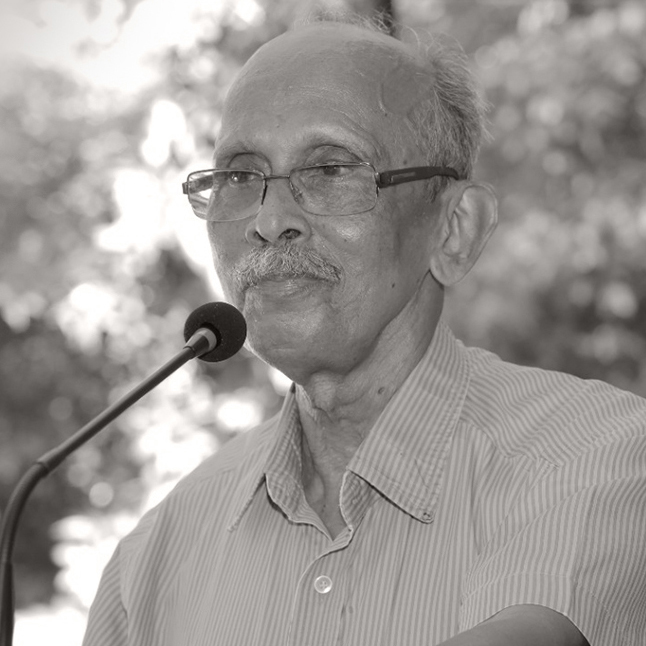
By Dr K. M. George
Former UN Professional | Author of three books and more than 300 papers | Secretary-General, Global Millets Foundation | CEO, Sustainable Development Forum
drkmgeorge.com | melmana@gmail.com | +91 99476 70887
Growing Older Is Not the Same as Growing Old
There is a strange contradiction in the way modern societies look at ageing. We have learnt how to prolong life, but we have not always learnt how to make those additional years worth living.
A person may reach seventy, eighty, ninety or even a hundred, yet spend the final decades increasingly isolated, inactive and anxious, convinced that life has already passed them by. Another person may be eighty-five and still wake up every morning with something to do, somebody to meet, something to learn, somewhere to go, and a reason to look forward to tomorrow.
The difference is not merely the number on the birth certificate. It is wellness.
Longevity and wellness should be treated as two hands of the same clock. Longevity tells us how long we live; wellness asks how well we live. The real achievement is not adding years to life, but adding life to those years. The World Health Organization makes essentially this distinction in its concept of healthy ageing: the objective is to maintain functional ability and enable older people to do what they value — a capacity shaped not only by genetics but by physical and social environment, behaviour, community and opportunity.
This essay is addressed to senior citizens everywhere — in Kerala or California, Nairobi or New York, Tokyo or Toronto. Race, nationality, language and culture may differ; the human requirements for dignity, companionship, movement, nourishment, sleep, meaning and hope are remarkably universal. The message is simple: do not retire from life merely because you have retired from employment.
The Myths We Need to Abandon
The modern longevity industry has produced a bewildering marketplace of powders, pills, supplements, diets and promises — a secret food that guarantees a century of life, a forbidden food that shortens it, a fasting schedule or a waking hour said to hold the key. These claims deserve healthy scepticism. There is no single longevity food, exercise, fasting schedule or morning ritual that guarantees a long life.
Centenarians themselves illustrate this. Two American women, Velma Long and Dorothy Boggess, became friends at twenty-three and have remained close through their both reaching one hundred and nine. Their story points to something far less glamorous than a miracle supplement: social connection, activity, engagement and friendship, sustained across a lifetime.
Longevity is more an orchestra than a solo instrument. Diet is one instrument; exercise another; sleep, social connection, mental activity, purpose, faith, medical care and environment are others. The music comes from the combination.
Beliefs That Can Turn Dangerous
Every culture carries its own beliefs about ageing. Some are harmless; others become dangerous when they replace medical judgement — a herb said to replace prescribed medicine, a food said to cure cancer, an illness blamed on insufficient faith. None of these claims should be accepted simply because they are old, fashionable or often repeated. Traditional knowledge deserves respect; so does scientific medicine and so does faith. But none should be allowed to harden into superstition.
The sensible rule is to believe deeply, but verify carefully. Older people should be especially cautious about extreme diets, prolonged fasting, excessive supplementation and abrupt changes in medication, since ageing changes metabolism, muscle mass, kidney function and the body’s tolerance for physiological stress. The objective is not to become a perfect human laboratory. It is to remain strong, independent, mentally engaged and joyful for as long as possible.
Diet: Eat to Nourish, Not Merely to Fill the Stomach
Food is not simply fuel; it is information. What we eat shapes body weight, blood glucose, cardiovascular health and gut function, and, indirectly, our capacity to remain active. For older people, the answer is rarely less food — it is better food: vegetables and fruits, pulses and other plant proteins, whole grains, nuts and seeds where appropriate, adequate protein, minimally processed foods, healthy fats, sufficient fibre and micronutrients, and adequate hydration, with particular caution around ultra-processed food, added sugar, salt, tobacco and alcohol.
There is, however, another danger for older people: under-eating. A thin elderly person is not necessarily a healthy one. Muscle is precious in later life, and inadequate protein and calories accelerate frailty and the loss of independence. The right question is not ‘how little can I eat?’ but ‘how much nourishing food does my body need to remain strong?’
Timing and Quantity: Sense Over Fashion
The timing of meals can influence metabolism, sleep and appetite; large meals late at night are best avoided. A sensible pattern is regular meals through the waking day, without continuous grazing, and a reasonable overnight gap. But there is no universally correct clock, and an older person with diabetes, low body weight, kidney disease or multiple medications should never imitate an influencer’s eating schedule — the right timing is whatever supports adequate nutrition, stable energy, good sleep and medical safety.
The same caution applies to quantity. There is wisdom in eating until satisfied rather than stuffed, but longevity should never become an obsession with calorie deprivation, particularly for a population already vulnerable to loss of muscle and bone. The real target is a healthy body composition and functional strength — the ability to walk, climb stairs, rise from a chair, carry a reasonable load, think clearly and take part in society — not an arbitrary number on the scale.
Intermittent Fasting and Morning Water: Useful Habits, Not Miracle Cures
Intermittent fasting is one of the great modern health fashions, and there is genuine scientific interest in time-restricted eating — but interest is not proof. The US National Institute on Aging has cautioned that the evidence remains insufficient to recommend fasting broadly, particularly given how little is known about its long-term safety in older adults. A healthy adult who has discussed the approach with a clinician may reasonably try a modest overnight fast; an older person should never undertake prolonged fasting merely because it is fashionable. If fasting brings weakness, dizziness, dehydration, muscle loss or poor tolerance of medication, it has defeated its own purpose.
Drinking water on waking is a sound habit, particularly after several hours of sleep and in a hot climate — but there is no evidence that water becomes a special medicine simply for being drunk on an empty stomach, nor that drinking very large quantities is inherently healthier. Requirements vary with climate, activity, diet and health, and thirst itself becomes a less reliable signal with age. The sensible principle: hydrate adequately, but do not worship the water bottle.
Exercise: The Closest Thing We Have to a Universal Medicine
If one prescription deserves to be written across every retirement home, it is: keep moving. Walking, dancing, gardening, swimming, cycling, stretching, household work, climbing stairs when safe, playing with grandchildren — movement keeps the body in conversation with itself.
The World Health Organization recommends that adults above sixty-five undertake at least one hundred and fifty minutes of moderate activity a week, or an equivalent amount of vigorous activity, with balance and strength work being especially important, and activity scaled to ability where mobility is limited. Strength deserves particular emphasis, since ageing brings loss of muscle mass even in a person who walks regularly but never challenges the muscles — a supervised programme using body weight, resistance bands or light weights can help, and balance training may prevent a single fall from becoming a life-changing event. The goal of exercise in old age is not to look young. It is to remain capable.
Sleep: The Night-Time Repair Shop
Sleep is not wasted time; it is maintenance. Older adults generally need around seven to eight hours, though individual needs vary, and good sleep supports emotional regulation, concentration, immune function and daily functioning. Persistent insomnia, loud snoring, repeated waking or excessive daytime sleepiness should never simply be accepted as ‘normal old age’ — they deserve medical attention. The evening should ideally become a period of gradual deceleration: less stimulation, less heavy food before bed, less endless scrolling, and more quiet, conversation and reflection. A good night’s sleep is not a luxury of old age; it is part of its infrastructure.
The Social Network: Perhaps the Most Underestimated Medicine
Here is the deepest lesson of Velma Long and Dorothy Boggess: stay connected. Do not allow retirement to become social disappearance. Call somebody, visit somebody, invite somebody for tea, attend a place of worship, join a reading group, volunteer, teach, mentor, take part in a local organisation — and use technology to stay in touch with distant family without letting it replace human presence altogether.
The World Health Organization now treats social connection as a major global public-health issue. Its 2025 Commission on Social Connection found that loneliness and isolation carry serious consequences for physical and mental health, quality of life and longevity, and called for social health to be taken as seriously as physical and mental health. This should change how we design communities for older people. A building for seniors is not truly age-friendly merely because it has ramps and lifts — it needs places where people can meet: a bench, a garden, a library, a dining room, a prayer space, a community hall, a walking path, a classroom. A simple ‘Good morning, how are you today?’ can be surprisingly powerful medicine.
Keep the Brain Working
The brain does not retire simply because the office does. Retirement can, in fact, be the start of a second intellectual life — a language, a memoir, a musical instrument, a grandchild taught, a lecture attended, a small research project begun. The purpose is not to become a genius at eighty; it is to keep the brain engaged with the world. Evidence from the dementia field supports the value of cognitive stimulation and social engagement, though no single activity guarantees protection, and the 2024 Lancet Commission continues to emphasise modifiable risk factors across the life course. A good rule: learn something every day that you did not know yesterday.
Have a Reason to See Tomorrow
Perhaps the most profound question in later life is not ‘how many years do I have left?’ but ‘what am I going to do with tomorrow?’ A person with something to accomplish — a book to finish, a tree to plant, a grandchild to help, a friend to call — has a psychological bridge into the future. The purpose need not be grand; it must be real.
A 2026 meta-analysis spanning twenty-five samples and nearly half a million participants found that higher purpose in life was associated with substantially lower mortality risk — an association, its authors are careful to note, rather than proof that purpose itself extends life. That distinction matters. Purpose is not a magic pill, but it may be one of the strongest psychological assets we can cultivate.
Faith and Satsang: Belonging as Medicine
Faith is deeply personal, and science cannot measure the divine — but it can study what happens to people who practise it. Religious communities often provide social connection, emotional support, shared ritual, moral orientation, service to others and a framework for facing suffering and death, all at once. A long-term study across three cohorts found that people attending religious services at least weekly showed lower mortality and better measures of psychosocial wellbeing, while cautioning that the effect may work partly through social integration and healthier behaviour rather than a single biological mechanism. Faith should never be sold as a longevity formula — but it can give life meaning, and a meaningful life encourages connection, discipline, hope and service.
Indian civilisation offers a beautiful word for the same idea: satsang, association with good people, truth and constructive company. Its everyday translation is simple — choose your companions carefully. Spend your days among the permanently cynical and fearful, and the world begins to look like a prison; spend time among the curious, compassionate and hopeful, and another possibility opens. Satsang requires no particular religion — a prayer group, an old circle of friends, a book club, a walking group, a body of retired professionals who still wish to contribute — the point is not merely to have people around you, but relationships that nourish you.
Cancer: Do Not Blame the Victim
One dangerous misconception must be confronted directly: cancer is not a punishment for laziness, inactivity or insufficient faith, and it is not proof of weak character. It results from complex interactions of genetic change, environmental exposure, infection, tobacco, alcohol, body weight, physical activity, diet, age and much else besides. Physical inactivity and unhealthy diet are genuine modifiable risk factors — the World Health Organization attributes nearly a quarter of cancer deaths to a group of factors including tobacco, alcohol, high body-mass index, low fruit and vegetable intake and inactivity — but that is entirely different from claiming that every inactive person will develop cancer.
Stress deserves the same care in how we speak of it. Chronic stress can harm health and disturb sleep, but the US National Cancer Institute is clear that whether it directly causes cancer remains unresolved, with mixed evidence. We should reduce stress because it is unhealthy — not because every difficult day is feared to produce disease. And a person with cancer needs treatment, compassion, dignity and companionship, never blame.
Longevity and Wellness Must Travel Together
There is little value in reaching a hundred if the final twenty years are spent without independence, friendship, movement, purpose or dignity. The real objective is healthy life expectancy. Governments should ask not merely how many years people are living, but how many of those years are lived in good health — a country that adds five years of average life expectancy but also five years of disability has not achieved what a country achieves by adding five years of active, independent life.
Ten Recommendations for Policymakers
The ageing population is not a burden to be managed quietly; it is one of the great demographic transformations of our time, and it deserves a coherent state response rather than a scatter of welfare schemes. The following ten measures could form the core of a Senior Citizens’ Wellness and Longevity Mission, and are offered here as the working basis of an initiative we are developing for senior and super-senior citizens through a dedicated foundation.
- Establish a dedicated national or state portfolio for senior citizens — a Ministry, Department or empowered Commission — so that ageing policy is no longer scattered across health, welfare, transport, housing and finance without coordination.
- Create Senior Citizens’ Wellness Centres in every substantial community, offering preventive health checks, physiotherapy, exercise programmes, nutrition advice, mental-health support, social activities, digital literacy, legal and welfare guidance, and volunteering opportunities.
- Make movement a public service — safe walking paths, parks, accessible transport, benches and community exercise spaces, so that an elderly person never needs a private gym to stay active.
- Launch a national or state social-connection programme that treats loneliness as a public-health concern, through befriending schemes, community clubs, intergenerational programmes and telephone or digital support networks, drawing on the framework of the WHO Commission on Social Connection.
- Make nutrition affordable, strengthening access to fruit, vegetables, pulses, whole grains and protein-rich foods, and supporting local and culturally appropriate food systems.
- Introduce an annual Healthy Ageing Assessment covering blood pressure, diabetes risk, nutrition, mobility, strength, falls risk, vision, hearing, oral health, cognitive concerns, mental wellbeing, social isolation and medication burden.
- Build age-friendly cities and villages, with roads, housing, public toilets, transport, footpaths, parks and public buildings designed with older residents in mind — an age-friendly community serves everybody better.
- Create a Second Career and Second Purpose programme, opening roles for older citizens as mentors, teachers, consultants, community volunteers, agricultural advisers, cultural custodians and digital mentors, so that retirement need not mean invisibility.
- Protect older citizens from ageism, financial exploitation, neglect and exclusion through strong laws, accessible reporting systems and public education — recognising older citizens as citizens with rights, not merely recipients of care.
- Measure healthy life expectancy, not merely life expectancy — tracking years lived independently, physical activity, loneliness, preventable disability, falls, avoidable hospitalisation, access to preventive care and participation in community life. What governments measure, governments eventually improve.
A Personal Charter for Every Senior Citizen
Move every day. Eat real food. Drink enough water. Sleep adequately. Keep learning. Stay socially connected. Pray or reflect if faith is part of your life. Give something to somebody. Protect your muscles and your balance. Laugh whenever you can. See your doctor when something changes. Do not isolate yourself. Do not surrender your curiosity. Do not let your age become your identity.
And every evening, ask one question: what is something I can look forward to tomorrow? If the answer is nothing, create something — call a friend, read a book, visit somebody, plant something, write something, teach something, pray for somebody, plan a journey, start a project. Life does not always hand us a reason for tomorrow. Sometimes we must make one.
Conclusion: Do Not Merely Add Years — Add Life
The story of extraordinary longevity is not, in the end, about defeating death; nobody wins that contest. The deeper challenge is to live so that the years we are given remain meaningful. The evidence points to a surprisingly ordinary prescription: eat sensibly, move, sleep, maintain strength, stay socially connected, keep the brain active, cultivate purpose, practise faith if faith is yours, serve others, avoid tobacco, limit alcohol, manage stress without becoming obsessed by it, seek medical care when needed — and never confuse ageing with uselessness.
The world’s senior citizens are not an afterthought. They are repositories of memory, experience, judgement and human resilience, carrying something the young cannot manufacture: lived experience. But experience becomes valuable only when it remains connected to the present. That may be the final secret of longevity — neither a pill nor a diet, but participation: in family, community, faith, learning, movement, friendship and life itself.
Perhaps the most beautiful lesson of Velma Long and Dorothy Boggess is that after more than eight decades of friendship, they did not discover a mysterious formula for immortality. They simply continued to live. That may be the most powerful prescription of all.
Author’s Note
This essay is intended as a public-health and wellness reflection, not as individual medical advice. Older adults with chronic illness, frailty, low body weight, diabetes, kidney disease or other medical conditions should discuss any major change in diet, fasting, exercise or fluid intake with a qualified healthcare professional.
About the Author
Dr K. M. George is a former United Nations professional, author of three books and more than three hundred papers, Secretary-General of the Global Millets Foundation (GMF) and CEO of the Sustainable Development Forum (SDF). Over a career spanning five decades, he has worked across roughly fifty-nine nations, engaging an estimated 180,000 stakeholders across some 17,000 villages, with deep experience in rural development, microfinance, food systems and international development.
Website: drkmgeorge.com | Email: melmana@gmail.com | Telephone: +91 99476 70887