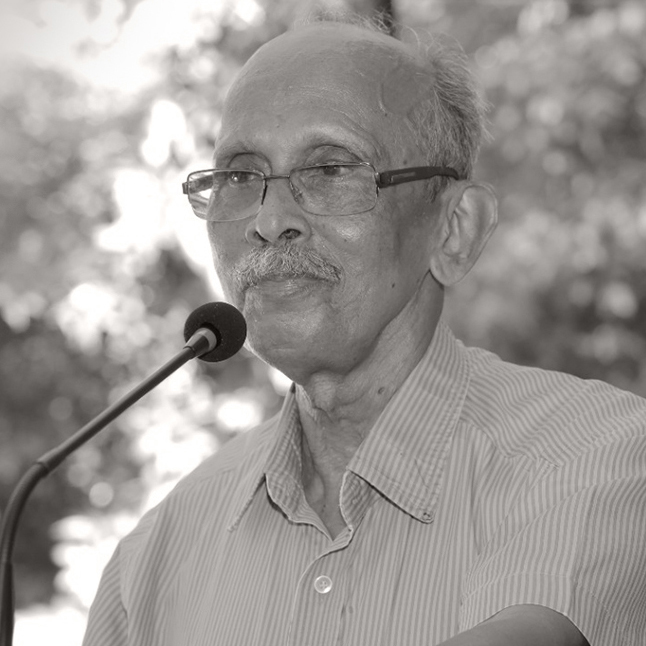
Dr K. M. George
Secretary-General, Global Millets Foundation (GMF)
Chief Executive Officer, Sustainable Development Forum (SDF)
Former UN Adviser and ADB Expert
ABSTRACT
Philanthropy is having something of a renaissance. At a time when governments are struggling to finance social protection, climate adaptation, public health and human development, private wealth is being invited — and increasingly volunteering — to fill part of the gap. New foundations are being established, family offices are professionalising their giving, corporations are expanding their social commitments and a new class of philanthropic advisers is helping wealthy families decide where, how and why to deploy their resources.
Yet philanthropy is not simply about generosity. It is also about power. This paper argues that the central issue is therefore not whether philanthropy is good or bad, but whether it is responsible, transparent, locally grounded and genuinely directed towards public purpose. Drawing on faith traditions, development economics and contemporary practice, it proposes ten policy directions for a philanthropic culture the paper terms “social stewardship” — one that strengthens human capability, public institutions and community resilience while remaining accountable to the society that ultimately gives wealth its meaning.
Keywords: philanthropy; charitable giving; faith-based giving; religious giving; foundations; zakat; dāna; tithing; CSR; taxation; inequality; development finance; social investment; accountability; philanthropic advisers.
There is something deeply paradoxical about philanthropy in the twenty-first century.
Never before has humanity possessed such extraordinary productive capacity, scientific knowledge and private wealth. Yet never has the moral question surrounding that wealth been more difficult to avoid. Extreme poverty has declined over the long term, but millions remain economically insecure. Governments struggle with ageing populations, climate change, public-health pressures, unemployment and growing demands for social protection. Wars and forced displacement continue to produce humanitarian crises on a scale that frequently overwhelms public resources.
Against this background, philanthropy is being asked to do more. The wealthy are being encouraged to become partners in development. Corporations are expected to contribute to social welfare. Family offices are establishing foundations. Religious organisations are mobilising charitable resources. International agencies increasingly seek partnerships with private foundations. There is much to welcome in this development. But there is also a question that deserves considerably more attention than it receives:
What gives a private individual the right to decide which public problems deserve private money — and, increasingly, public influence?
That is not an argument against philanthropy. It is an argument for taking philanthropy seriously. A donation to a village school may be an act of compassion. A foundation spending hundreds of millions of dollars on education reform is something different — it begins to resemble a form of private public policy. A billionaire financing research into a disease may accelerate scientific progress. But if the same individual begins determining which areas of medical research deserve attention, the issue is no longer merely charitable.
Money has consequences. Large amounts of money create choices. Choices create influence. Influence creates power. The modern debate about philanthropy therefore needs to move beyond the familiar question of how much money is being donated. We should also ask who decides, who benefits, who participates, who is accountable, and what happens when the donor’s priorities differ from those of the communities concerned.
It is tempting to associate philanthropy with wealthy Western families, large foundations and corporate social responsibility. Historically, that would be a serious mistake. Giving is far older than the modern corporation.
In India, the idea of dāna has deep roots. Giving to those in need, supporting religious institutions, feeding others and contributing to community welfare formed part of an ancient moral economy. Buddhist traditions placed generosity among the important virtues of a good life; Jain traditions similarly connected ethical conduct with compassion and restraint.
Christianity gave charity an equally powerful moral foundation. The obligation to care for the poor, the sick, the stranger, the widow and the orphan became an important part of Christian social teaching. For centuries, churches and religious communities were among the principal providers of education, healthcare, food and relief in many societies.
Islam developed perhaps one of the most elaborate systems of organised giving. Zakat established charitable giving as a religious obligation for Muslims meeting the relevant conditions. Sadaqah provided a voluntary form of generosity, while waqf created enduring charitable endowments that historically financed schools, hospitals, water facilities and other public goods.
Judaism’s tzedakah, Sikh seva, Buddhist dāna and numerous indigenous traditions similarly demonstrate that generosity has never been exclusively a Western invention. For much of human civilisation, wealth was not regarded simply as a possession — it was regarded as carrying an obligation. Modern philanthropy has changed the machinery of giving, but not necessarily its underlying moral question.
The great change of the modern period was the institutionalisation of private generosity. Industrialisation created fortunes of a scale previously unknown. Wealthy individuals began to establish hospitals, universities, libraries, research institutions and charitable foundations. Over time, philanthropy became increasingly professional — the donor no longer needed merely to write a cheque, but could establish a permanent institution, recruit professional staff, commission research, employ investment managers and develop long-term strategies.
This has been an extraordinary development. It has also changed the character of philanthropy. Traditional charity tended to respond to immediate human need; modern philanthropy increasingly asks whether it can alter the causes of that need. That distinction is important. Giving a poor family food for a week is charity. Helping that family acquire a productive asset, access credit, improve its health, educate its children and build a sustainable livelihood may be philanthropy of a different order.
Neither should be dismissed. A hungry person cannot eat a five-year development strategy. The challenge is to combine compassion for immediate suffering with investment in the conditions that reduce suffering over time.
There is a convenient answer to this question: because they care. That answer is true, but incomplete. Human motivation is rarely so tidy.
Some people give because they have witnessed suffering personally. Some give because their religion requires or encourages generosity. Some give because their parents taught them to give. Some want to return something to the society in which they became prosperous. Some want to create a family legacy. Some are motivated by social recognition. Some want to influence a particular field of public policy. Some want to improve the environment in which their businesses operate. And yes, tax considerations can sometimes play a role.
None of these motivations automatically invalidates a philanthropic act. Indeed, expecting philanthropy to be entirely altruistic may be unrealistic. Human beings frequently act from several motives simultaneously. A businessperson may genuinely care about rural education while also believing that an educated population is good for the economy. A religious donor may seek spiritual fulfilment while helping people in distress. A family may want both to honour its parents and to improve the local community.
The real issue is not whether motivation is perfectly pure. The real issue is whether the outcome serves a genuine public purpose. That is why philanthropy should ultimately be judged less by the psychology of the donor than by the quality of the institution, the integrity of the process and the lives affected.
Any serious discussion of global philanthropy that ignores religion will be incomplete. Religious traditions have mobilised human generosity on a scale that modern foundations can only partly replicate.
Christianity has its traditions of charity and tithing. Islam has zakat, sadaqah and waqf. Hindu traditions emphasise dāna. Sikhism places extraordinary emphasis on seva. Buddhism regards generosity as an important virtue. These practices are not merely theological ideas — they have created institutions. In many parts of the developing world, a person who wants to give does not begin by searching for a registered non-governmental organisation. He or she may give to a church, mosque, temple, monastery, gurdwara or community institution. Religious institutions often have something that professional charities struggle to acquire: trust.
The evidence from India illustrates this point. Pew Research found very high levels of charitable and religious giving among Indian adults, with religious participation strongly associated with patterns of giving.
This should encourage policymakers to stop thinking about faith organisations merely as cultural institutions. In many countries they are part of the social infrastructure through which food, education, healthcare, shelter and emergency assistance reach people.
There is, however, an important qualification. Faith-based philanthropy must remain voluntary and non-coercive. It should never become a mechanism through which charitable assistance is conditional upon religious conversion or political loyalty. The boundary between religious service and religious pressure must remain clear. Faith can inspire generosity. It must not become an excuse for exploitation.
There is a striking similarity between otherwise very different religious traditions: they all challenge the idea that wealth is exclusively a private possession. Christian teaching on charity and tithing, Islamic zakat, Hindu dāna and Sikh seva all suggest, in different ways, that those who possess resources have responsibilities towards others.
This idea deserves renewed attention in modern economic thinking. The language of economics often treats wealth as an entitlement arising entirely from ownership. The language of religion frequently treats wealth as a trust accompanied by obligations. Modern philanthropy could learn from this older idea of stewardship.
Islamic philanthropy is particularly instructive because zakat is not simply a spontaneous act of kindness — it represents an institutionalised moral obligation. Waqf similarly demonstrates how private assets can be placed permanently in the service of public purposes. The United Nations and other international institutions have increasingly recognised the potential contribution of zakat, waqf and other forms of Islamic social finance to development.
A society becomes healthier when those who have more recognise obligations towards those who have less.
This question should not be avoided simply because it makes philanthropists uncomfortable.
Tax incentives matter. Governments deliberately provide favourable tax treatment to charitable activity because they believe society benefits when private resources are devoted to public purposes. In that sense, the State is effectively sharing part of the cost. But once the State gives up tax revenue to encourage philanthropy, a legitimate public question follows: what accountability should accompany that subsidy?
The answer should be neither suspicion nor indulgence. A donor who gives legitimately to a registered charitable institution should not be portrayed as a tax evader simply because tax law provides an incentive. At the same time, charitable structures should not become vehicles for private consumption, family enrichment, artificial transactions or the accumulation of influence under the protection of charitable status.
The principle should be straightforward: tax privilege must follow public benefit. The greater the tax advantage, the stronger the case for transparency. This is particularly important when foundations accumulate large endowments — a charitable organisation should not be able to invoke public benefit indefinitely while operating with little public accountability. Nor should governments impose such burdensome regulation that honest citizens become discouraged from giving. Good policy lies between these two extremes.
Perhaps the most interesting new figure in modern philanthropy is not the billionaire. It is the adviser standing beside the billionaire.
A generation ago, philanthropic decisions were often informal. Today wealthy families can employ specialists in strategy, impact measurement, tax, governance, investment and succession. The philanthropic adviser is becoming a new intermediary between private wealth and public purpose.
This can be extremely valuable. A good adviser can ask questions that an enthusiastic donor may not ask: Is this intervention evidence-based? Are local people involved? What happens when the grant ends? Could the money produce greater benefit elsewhere? Are we treating symptoms rather than causes? Are we strengthening local institutions or creating dependence? Are we measuring activity rather than impact?
But there is a danger here as well. The adviser can become part of the machinery of wealth rather than an independent voice for social purpose. The profession therefore needs an ethical foundation of its own. A philanthropic adviser should not merely be a sophisticated distributor of money — the adviser should sometimes be willing to say, “Do not fund this.” That may be the hardest advice a wealthy client can receive, and sometimes the most useful.
There is an uncomfortable truth about large-scale philanthropy: the ability to give away enormous amounts of money is itself a form of power.
Suppose a private foundation decides to spend hundreds of millions of dollars on agricultural technology in developing countries. Its decision may influence universities, governments, farmers, research institutions and private companies. Suppose another foundation decides that a particular approach to education is the future — schools and governments may begin adapting to that model. The donor may have the best intentions. But intention does not eliminate power.
Democratic governments are required to explain their policies to citizens, parliaments, courts and the media. Private foundations do not operate under exactly the same system. This creates what might be called the democratic accountability gap.
Philanthropy should not be prevented from influencing public debate — indeed, civil society depends upon independent voices. But when private wealth becomes large enough to influence public policy materially, greater transparency becomes reasonable. The question should not be “How can we stop wealthy people from giving?” It should be:
How can we ensure that wealth can support public good without becoming a private licence to determine public priorities?
There is genuine philanthropy. There is also philanthropic theatre. Sometimes the two are difficult to distinguish.
A donor may build a hospital bearing his or her name. That does not mean the hospital is ineffective. A corporation may sponsor an environmental programme while simultaneously damaging the environment elsewhere. That does not necessarily mean the programme has no value. Human motivations are complicated.
The better test is practical. What happened to the people who were supposed to benefit? Did incomes rise? Did health improve? Did children remain in school? Did women acquire greater economic independence? Did farmers become more resilient? Did communities gain institutional capacity? Did the programme survive after the donor left?
These are harder questions than asking whether a project looks impressive in an annual report. Philanthropy should therefore resist the temptation to confuse visibility with impact. A modest rural programme that quietly changes thousands of lives may be more valuable than a magnificent building inaugurated before television cameras.
Modern philanthropy has embraced impact measurement. That is broadly welcome. But there is a danger in becoming obsessed with what can easily be counted.
A foundation may report the number of beneficiaries reached, training sessions conducted, wells constructed or scholarships awarded. These are outputs. They are not necessarily outcomes. The construction of a school is not the same as better education. The distribution of agricultural inputs is not the same as higher farm income. The number of women trained is not the same as women’s empowerment. The number of microloans issued is not the same as improved household welfare.
Development professionals have wrestled with this distinction for decades; philanthropy should learn from that experience. The most valuable impact is sometimes slow, indirect and difficult to measure. A child who remains in school because of a scholarship may eventually become a doctor, teacher or entrepreneur twenty years later — the original donor may never know the full consequence. Philanthropy therefore needs measurement, but it also needs humility. Not everything valuable can be captured by a dashboard.
One of the weaknesses of international philanthropy has been its tendency to concentrate decision-making in distant capitals and wealthy countries. The donor knows the problem; the consultant designs the programme; the international organisation manages the grant; the local organisation implements it; the community receives it. This hierarchy is increasingly difficult to justify.
A farmer generally knows more about the practical obstacles to farming in his village than a consultant sitting in London, New York or Geneva. A rural woman often understands why a financial-inclusion programme is failing better than the institution that designed it. A local teacher knows why a school intervention is not working.
The future of philanthropy must therefore become more participatory. The beneficiary should no longer be treated merely as a recipient — the beneficiary should increasingly become a partner in design. This is particularly important in India, Africa and other parts of the Global South, where local civil-society institutions frequently possess deep knowledge that large external organisations lack.
India has a remarkable philanthropic inheritance. Its culture of dāna is ancient. Religious institutions have long supported education, food distribution, healthcare and community welfare. Business families have created hospitals, educational institutions and charitable trusts. The modern era has added corporate social responsibility, family foundations and professionally managed philanthropy.
The scale is now considerable. Recent India philanthropy research estimates private philanthropy in the range of ₹1.3–1.4 lakh crore annually, while public expenditure continues to account for the overwhelming majority of social-sector spending.
This distinction is important. Philanthropy is growing rapidly, but the State remains the principal financier of social development. India should not therefore imagine that private philanthropy can replace public expenditure. The opportunity is different: philanthropy can take risks that government cannot always take. It can experiment with new approaches, finance innovation, strengthen civil society, support neglected communities and generate evidence that can later inform public policy.
Philanthropy experiments; society learns; government scales what works.
That is a much healthier relationship than philanthropy attempting to substitute for government.
The deepest test of philanthropy is whether it leaves people more capable than before. Emergency assistance will always be necessary, but development philanthropy should ideally move beyond permanent relief.
A poor household needs food today; it also needs the means to secure food tomorrow. A farmer needs emergency assistance after a climate shock, but he also needs irrigation, insurance, technology, markets, financial access and resilient crops. A woman may need a grant, but she may also need ownership of an asset, access to credit, skills and a voice in household decisions.
This is where philanthropy can become social investment — financing the transition from vulnerability to resilience. The same principle applies to microfinance and rural development: the objective should not simply be to create borrowers, but to create economically secure households and self-confident communities. That is a much more demanding definition of success.
Governments and philanthropic institutions should consider ten practical directions.
The philanthropic culture of the future may need a different vocabulary. The donor should not think merely, “This is my money and I am giving some of it away.” A more constructive understanding is: “I have accumulated resources within a society. I now have an opportunity — and perhaps an obligation — to use some of them for purposes beyond myself.”
That is stewardship. It is also closer to the moral insight found in many of the world’s religious traditions. The Christian notion of stewardship, the Islamic understanding of zakat and waqf, Hindu dāna, Buddhist generosity and Sikh seva differ greatly in theology, but they share a broad intuition: wealth carries responsibility. Modern economics need not adopt religious doctrine to learn from that principle.
A society in which wealth is entirely detached from responsibility will eventually face a crisis of legitimacy. A society in which wealth is used intelligently to expand human capability has a better chance of maintaining social cohesion.
Philanthropy should neither be worshipped nor condemned. It is one of humanity’s oldest expressions of solidarity, but in its modern form it has acquired a new scale and therefore a new responsibility.
The philanthropic dollar, rupee, pound or euro can feed a hungry family, educate a child, finance a medical discovery, support a farmer, protect a forest or help rebuild a community after disaster. Such giving deserves respect. But large-scale philanthropy can also influence institutions, public priorities and political debates. When private wealth becomes sufficiently concentrated, generosity and power become inseparable.
That is why the future of philanthropy must be governed by more than good intentions. It requires ethics, evidence, transparency and humility. The donor must be willing to listen. The adviser must be willing to challenge. The foundation must be willing to disclose. The beneficiary must be allowed to participate. The government must remain responsible for public goods. And society must retain the right to ask difficult questions.
The most important question may ultimately be a very simple one:
Did the giving make people more capable of determining their own future?
If the answer is yes, philanthropy has served its highest purpose. If it merely made the donor more famous, it has served a much smaller one.
The future should therefore not belong to philanthropy as spectacle, philanthropy as tax engineering or philanthropy as private power. It should belong to philanthropy as social stewardship — generous enough to respond to suffering, intelligent enough to address its causes, humble enough to listen to communities, and responsible enough to recognise that private wealth, however legitimately acquired, ultimately exists within a larger social contract.
About the Author: Dr K. M. George is Secretary-General of the Global Millets Foundation (GMF) and Chief Executive Officer of the Sustainable Development Forum (SDF). He is a former United Nations Adviser and Asian Development Bank Expert with five decades of international development experience spanning FAO, UNDP, UNOPS, IFAD, ADB and UN Women across approximately 59 nations.
Home
About Me
Profile
Workes
Gallery
Contact
Copyright © 2026
Powered by Truly Converting Content
All Rights Reserved.