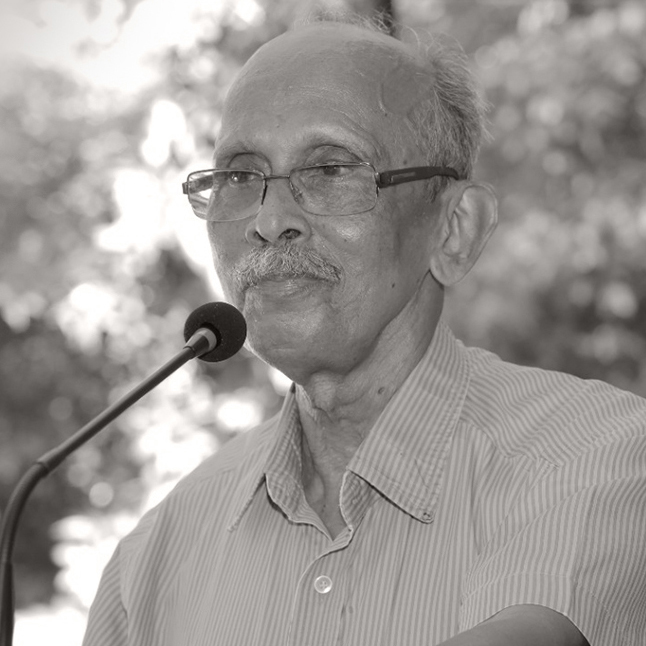
Dr K. M. George
Former United Nations Adviser and Asian Development Bank Expert
Secretary-General, Global Millets Foundation (GMF)
Chief Executive Officer, Sustainable Development Forum (SDF), Mel Mana Gardens, Ooramana, Kochi, Kerala, India
Email: melmana@gmail.com | Mobile: +91 9947670887
Abstract
Kerala’s August 2026 red-alert deluge, which submerged homes and commercial streets in Pathanamthitta, Kottayam, Idukki, Kasaragod and Kozhikode within hours, is the latest instalment of a pattern that has recurred with grim regularity since the catastrophic floods of 2018. This paper argues that while a warming Arabian Sea and El Niño-linked monsoon variability have undoubtedly intensified single-day rainfall events across the Western Ghats, the scale of destruction owes at least as much to decades of unregulated quarrying, unplanned housing and road construction on wetlands and floodplains, and the collapse of natural drainage systems choked by plastic waste. It further documents the growing volume of non-biodegradable plastic surging into Kerala’s backwaters with every flood, and the attendant public health threat of microplastic ingestion through the fish and food chain. The paper closes with a ten-point action agenda for the Government of Kerala and comparable developing regions, and sets out specific roles for United Nations agencies, the Asian Development Bank, the African Development Bank, the Islamic Development Bank, the newly constituted Board of Peace, and civil society, in building long-term climate and disaster resilience.
Keywords: Kerala floods; flash floods; climate change; El Niño; quarrying; sand mining; unplanned urbanisation; wetland encroachment; plastic pollution; backwaters; microplastics; disaster governance; Western Ghats; sustainable development.
Every monsoon now arrives in Kerala accompanied by the same unsettling question: is this a natural calamity, or one that the state has substantially engineered for itself? In the first days of August 2026, the India Meteorological Department placed eight districts under red alert as the Pamba and Manimala rivers broke their banks at Ranni in Pathanamthitta, sending waist-deep water through shops, homes and interior villages. The Meenachil river submerged homes along its course through Kottayam, while Idukki reported multiple landslips and inundated roads. Coastal Chellanam in Ernakulam took the double blow of heavy rain and rough seas, accelerating erosion even as Kasaragod and Kozhikode reported evacuations and landslide-prone hamlets emptied ahead of further rain.
This is not an isolated season. It follows the 2018 flood that killed over four hundred people and displaced nearly a million; the 2019 floods that claimed 121 lives; and the 2024 Wayanad landslides, in which more than four hundred people were buried under debris in a single night. Each event has been followed by expert reports pointing to the same structural causes, and each has been followed, within a few years, by a policy retreat. This paper sets out to disentangle what is genuinely attributable to a changing climate from what is squarely the result of short-term extractive gain at the cost of the region and its posterity, and to translate that analysis into a concrete, time-bound agenda for governments, international financial institutions and civil society.
The immediate meteorological picture is unremarkable in isolation: a monsoon depression producing extremely heavy rainfall over a short span, as the IMD’s own red and orange warnings for Ernakulam, Thrissur and Palakkad made clear. What converted heavy rain into a humanitarian emergency, however, was the terrain’s diminished capacity to absorb or channel it. Torrents that a healthy watershed would have retained in forest soil, wetlands and paddy fields instead arrived, almost undiminished, in market towns and residential colonies within hours. The state’s Revenue Minister convened all district collectors as the National Disaster Response Force and police mobilised, and Chief Minister VD Satheesan confirmed that rehabilitation and relief efforts were being expedited alongside medical care for the injured. These are the necessary and creditable responses of a functioning emergency-management system. They are not, however, a substitute for the upstream planning that determines whether such a response is needed at all.
It would be dishonest to deny a climatic dimension to Kerala’s flood cycle. A warming Arabian Sea is now understood to generate more frequent and more intense monsoon depressions, concentrating rainfall into shorter, harder bursts rather than distributing it evenly across the season, a pattern documented after the 2018 floods when Kerala received a190 per cent increase in rainfall in the first ten days of August compared with historical norms. El Niño and La Niña cycles further modulate the strength and timing of the Indian monsoon from year to year, and cannot be legislated away by any state government. But climate variability sets the stage; it does not by itself explain why a flash flood in Ranni submerges shops within hours, or why a rainfall event that the hills once absorbed now arrives at the doorstep of towns thirty kilometres downstream. The scientific consensus, including the 2011 Western Ghats Ecology Expert Panel report, is that climate stress and human-driven land degradation act together, with degraded catchments turning an intense but survivable weather event into a disaster. Climate change is real and worsening; it is also, in Kerala’s case, a convenient alibi that has allowed successive governments to avoid confronting the second, more politically inconvenient set of causes addressed below.
Kerala’s 2015 ban on river sand mining was, on paper, an environmental reform. In practice, researchers at the National Institute of Technology, Kozhikode, have shown that it displaced the problem rather than resolving it: as builders switched to manufactured sand, stone quarrying across the Western Ghats expanded five-to-tenfold between 2011 and 2021, with a disproportionate surge in 2016 alone. Of the 355 operational quarries the researchers identified across twelve districts, 72 lie within ten kilometres of twenty protected areas. The consequences are not merely aesthetic. Blasting and excavation loosen hillslopes, and quarry rubble blocks the natural course of streams; the ecologist Madhav Gadgil, who led the 2011 Western Ghats Ecology Expert Panel, has repeatedly pointed to indiscriminate quarrying as a direct contributor to the landslides that killed hundreds in 2018, and the pattern recurred in Wayanad in 2024. The Gadgil panel’s recommendation to place a large share of the Western Ghats under strict protection from mining and quarrying was rejected by the state government in 2011 and diluted further by central government orders in the years that followed. In May 2025, the state’s Revenue Department issued fresh guidelines effectively lifting the near-decade-old moratorium on river sand mining, even as the quarrying boom it was meant to curb continues unabated. This is the crux of the matter: short-term extraction for construction-sector profit has been permitted to override the region’s long-term hydrological safety, decade after decade, regardless of which government has been in office.
The second, closely related cause is the piecemeal, project-by-project approach to housing and road construction, planned in isolation from any long-term hydrological or land-use strategy. Wetlands and paddy fields that once stored monsoon run-off and released it slowly have been progressively filled and built upon; riverbanks have been encroached upon for housing colonies and commercial development; and roads have been laid across natural drainage lines without adequate culverts or catchment allowance. The result is a landscape that sheds water almost as fast as concrete sheds it, rather than one that absorbs and delays it. Flood waters that a generation ago would have percolated into paddy fields or been held back by forest cover now run off hillsides bare from quarrying, through valleys narrowed by encroachment, into towns whose storm-water drains were sized for a smaller, slower-arriving monsoon. This is the direct answer to the question of why flood waters are not flowing down towards the sea as they once did: the channels built to carry them, natural and artificial alike, have been narrowed, blocked or built over, one isolated planning decision at a time.
Every flood in Kerala now carries a second, less visible disaster in its wake: an immense volume of plastic waste, dislodged from roadside dumps, drains and landfills and driven into rivers, canals and ultimately the Vembanad backwaters. Bridges over the Muvattupuzha and other rivers have repeatedly been reported carpeted with tonnes of plastic bottles, bags and other waste after past floods, while a widely circulated video from Kalady showed plastic and debris being cleared from a bridge only to be dumped straight back into the river below. The Brahmapuram waste-processing site near Kochi has been a recurring source of concern: leachate and ash from burnt plastic there has been found flowing through the Kadambarayar into the Vembanad backwater system, with researchers testing for dioxins, compounds associated with cancer and genetic harm even at low concentrations.
The scale of this pollution is not a cosmetic problem. Most of the plastic entering Kerala’s water bodies is non-biodegradable and persists for decades, fragmenting over time into microplastics that are ingested by fish and shellfish and, in turn, by the human beings who eat them. Peer-reviewed research on microplastic ingestion elsewhere in the world has linked chronic exposure to inflammatory, endocrine-disrupting and potentially carcinogenic effects, and Kerala’s densely populated backwater fishing communities are among the most exposed anywhere in India. A 2018 state government survey found over seventy per cent of Kerala’s water sources already contaminated, with more than half of that pollution traced to solid waste from households, markets and hotels, a baseline that every subsequent flood only worsens by flushing accumulated waste in a single, concentrated pulse into the backwater ecosystem. This is a long-term, irreversible health hazard layered on top of the immediate trauma of flooding, and it deserves policy attention equal to the flood response itself.
The following measures are grouped as short-term (within one to two monsoon seasons) or long-term (structural, multi-year) to give policymakers a sequenced, actionable framework.
The recurrence and scale of these floods place them squarely within the remit of the international development and humanitarian architecture, not as a matter of charity but of shared responsibility for climate-vulnerable regions of the developing world.
Kerala’s floods are neither a purely natural catastrophe nor a purely man-made one; they are what happens when a changing climate meets a landscape whose natural defences have been dismantled for short-term gain. Blaming El Niño alone lets policymakers off the hook for decades of unregulated quarrying, unplanned construction and plastic pollution; blaming only the quarrying mafia understates the genuine and worsening burden of a warming climate. What is required is neither denial of climate change nor resignation to it, but a sustained, well-governed programme that restores the region’s capacity to absorb, channel and recover from extreme rainfall, while cutting off, permanently, the extractive practices that have made every monsoon more dangerous than the last. The wellbeing of Kerala’s villages, towns and cities, and the ecological inheritance owed to its posterity, depend on treating this as a governance failure that can be corrected, not a natural fate that must be endured.
India Meteorological Department, red and orange alert bulletins for Kerala, 1 August 2026.
The News Minute, ‘Kerala battered by heavy rain, landslips and flash floods; 8 districts on red warning’, 1 August 2026.
On Manorama, ‘Heavy rain wreaks havoc across Kerala; landslides, floods claim lives as nine districts remain on red alert’, 1 August 2026.
Mongabay India, ‘Quarries devour buffer forests of Western Ghats after sand mining ban’, November 2025.
Scroll.in, ‘How stone quarries are destroying the Western Ghats after sand mining ban’, December 2025.
Western Ghats Ecology Expert Panel (Gadgil Committee), Report to the Ministry of Environment, Forest and Climate Change, Government of India, 2011.
VOA News / Relief Web, ‘Did Environmental Degradation Worsen Kerala’s Flood Tragedy?’, August 2018.
Nature, ‘Devastating Kerala floods exacerbated by mining and dams’, September 2018.
Kerala Kaumudi, ‘Toxic water from burning plastic waste in Brahmapuram flowing through Kadambarayar’, 2026.
The News Minute, ‘As flood waters recede, Kerala now faces daunting task of waste disposal’, August 2023.
World Bank, Press Release on Kerala Solid Waste Management Project, 9 March 2021.
Wikipedia, ‘2018 Kerala floods’, ‘2019 Kerala floods’, ‘2020 Kerala floods’ and ‘2024 Wayanad landslides’, consolidated casualty and rainfall data.
Home
About Me
Profile
Workes
Gallery
Contact
Copyright © 2026
Powered by Truly Converting Content
All Rights Reserved.