Final Draft of Delhi Summit
Author
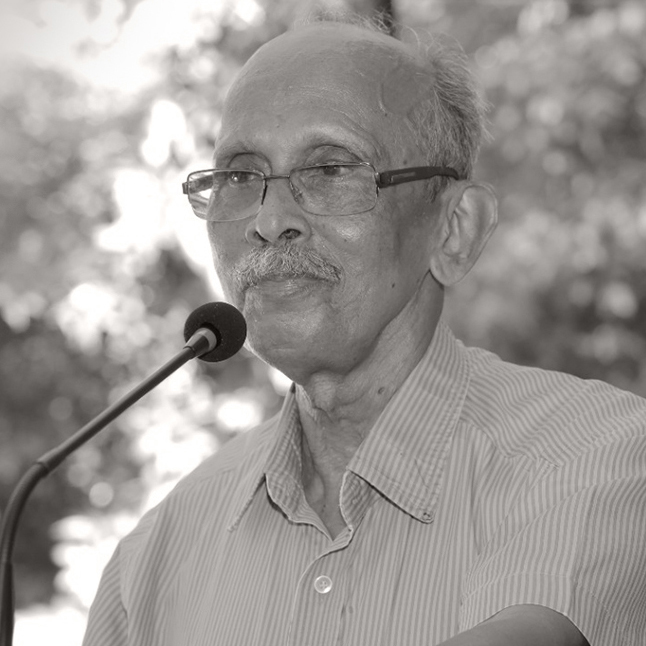
Dr K. M. George
Former UN Professional
Secretary General – Global Millets Foundation (GMF)
Chief Executive Officer – Sustainable Development Forum (SDF)
Abstract
Indian agriculture employs nearly half of the nation’s workforce yet remains trapped in a vicious cycle of low incomes, high drudgery, climate volatility, gender invisibility, occupational hazards, weak market power, chronic indebtedness, and alarming levels of psychological distress culminating in farmer suicides. This paradox—where those who feed the nation remain among its most vulnerable—represents one of the gravest policy failures of post-independence India. This paper argues that Artificial Intelligence (AI), if ethically governed and inclusively deployed, can become a transformative public good capable of restoring dignity, resilience, and remunerative value to Indian agriculture. Moving beyond yield-centric narratives, the paper presents an integrated policy framework that positions AI as a tool for human wellbeing, climate resilience, gender empowerment, occupational safety, mental health protection, and institutional trust. Anchored in the realities of small and marginal farmers, especially women, and aligned with the Sustainable Development Goals, the paper proposes a comprehensive national roadmap to reimagine agriculture as a dignified, aspirational, and future-ready livelihood. The ultimate measure of success, it argues, lies not in algorithms deployed but in lives saved, distress reduced, and hope renewed across rural India.
Executive Summary
Indian agriculture stands at a historic crossroads. Despite employing nearly half of the country’s workforce, the sector continues to be characterised by low and volatile incomes, high physical drudgery, severe gender inequities, climate vulnerability, post-harvest losses, weak market integration, occupational hazards, and a deep erosion of dignity among farmers—particularly small and marginal holders and women. Farmer suicides, snakebite deaths, untreated mental distress, and climate-induced shocks are not aberrations; they are systemic outcomes of long-standing policy blind spots.
This policy paper contends that Artificial Intelligence, when embedded within a framework of ethics, equity, and empathy, can catalyse a structural transformation of Indian agriculture. AI must not be viewed merely as a productivity-enhancing tool, but as a foundational public infrastructure capable of delivering anticipatory governance—predicting risk, preventing distress, protecting lives, and restoring trust between the state and farmers. By integrating AI across climate intelligence, crop advisories, insurance, credit, markets, occupational health, and mental wellbeing, India can move agriculture from a subsistence gamble to a resilient, knowledge-driven enterprise.
The paper advances sixteen firm policy recommendations, including the establishment of a National AI for Agriculture and Rural Resilience Mission, AI-driven parametric crop insurance, farmer distress early warning systems, snakebite risk mapping, gender-disaggregated data mandates, and wellbeing metrics in agricultural policy evaluation. Aligned with the Sustainable Development Goals, the proposed framework seeks to make Indian—and by extension Asian—smallholder agriculture a global model of inclusive, dignified, and sustainable development.
- Introduction: The Moral and Economic Paradox of Indian Agriculture
Indian agriculture feeds 1.4 billion people, sustains rural cultures, and underpins national food security. Yet it remains synonymous with poverty, uncertainty, and despair. This contradiction is not merely economic; it is moral. The persistence of agrarian distress reflects a development model that has extracted value from rural India without investing adequately in its resilience, safety, and dignity. Policy discourse has traditionally focused on production targets and procurement volumes, while ignoring the lived realities of farmers as workers, caregivers, risk-bearers, and citizens.
Artificial Intelligence arrives at a moment when incremental reforms are no longer sufficient. Climate change, demographic shifts, feminisation of agriculture, and rural youth migration demand a systemic rethinking of how agriculture is organised, valued, and governed. This paper situates AI within this broader civilisational challenge.
- Structural Crisis of Indian Agriculture
Indian agriculture is beset by interlocking structural failures:
- Economic Fragility: Low and volatile farm incomes, high input costs, and weak price realisation despite MSP announcements.
- Climate Dependence: Heavy reliance on monsoons, with inadequate irrigation and climate buffers.
- Post-harvest Losses: Estimated at 15–25%, eroding already thin margins.
- Market Power Asymmetry: Farmers as price-takers in fragmented markets.
- Gender Invisibility: Women’s labour remains largely unpaid, unrecognised, and unsupported.
- Occupational Risk: Agriculture ranks among the most dangerous professions, yet remains excluded from formal safety regimes.
These failures are cumulative, compounding vulnerability across generations.
- Beyond GDP: Opportunity Cost, Wellbeing, and Invisible Contributions
Conventional agricultural GDP accounting excludes women’s unpaid labour, ecological services of small farms, opportunity costs of land and time, and mental health impacts. As a result, policy systematically undervalues agriculture and rural life. A wellbeing-based framework—encompassing physical, mental, social, and economic dimensions—is essential for meaningful reform.
- Gender, Power, and the Politics of Invisibility
Women constitute a majority of agricultural workers in many regions, yet lack land titles, credit access, insurance coverage, and representation in technology design. AI offers a historic opportunity to recentre women as decision-makers through voice-based, vernacular, time-sensitive tools linked to self-help groups, microfinance, and local institutions.
- Silent Emergencies: Farmer Suicides and Mental Distress
India records over ten thousand farmer suicides annually. These deaths are systemic failures driven by debt, crop loss, market shocks, delayed insurance, and social humiliation. AI can enable early detection of distress through integrated analysis of climate, credit, yield, and price data, triggering preventive interventions rather than posthumous compensation.
- Occupational Health Crisis: Snake Bites and Invisible Deaths
India accounts for nearly half of global snakebite deaths, with farmers and farm women most at risk. AI-enabled geospatial risk mapping, seasonal alerts, emergency routing to antivenom facilities, and automatic health insurance triggers can save thousands of lives annually at minimal cost.
- Climate Change as a Force Multiplier
Erratic rainfall, heat stress, pest outbreaks, and water depletion have transformed farming into a high-risk enterprise. Smallholders face climate risk without climate buffers. AI-driven hyper-local climate intelligence can convert uncertainty into informed decision-making.
- Why AI, and Why Now?
AI enables predictive, real-time, and personalised intelligence across the agricultural value chain. Its power lies in integration—connecting climate, crops, credit, insurance, health, and markets into a unified rural resilience system.
- AI Across the Agricultural Lifecycle
(Expanded tables detailing AI applications from pre-sowing to markets, including gender and climate lenses.)
- AI for Small and Marginal Farmers: Restoring Dignity
By democratising expert knowledge, aggregating data for collective bargaining, and enabling value creation, AI can restore self-respect and agency to smallholders.
- AI, Microfinance, and Escaping the Debt Trap
AI-enhanced credit scoring, flexible micro-loans, and integrated insurance can transform finance from an instrument of exploitation into one of empowerment.
- Retaining Educated Youth in Agriculture
AI can reposition agriculture as a knowledge-intensive, entrepreneurial sector, retaining talent and reversing distress migration.
- Crop Insurance: From Tokenism to Trust
AI-driven parametric insurance enables rapid, transparent, and inclusive payouts, restoring faith in public institutions and reducing suicide risk.
- A Unified AI-Based Rural Resilience Stack
An integrated architecture combining data, intelligence, delivery, protection, and governance layers is proposed as national public infrastructure.
- Alignment with Sustainable Development Goals
The proposed framework advances SDGs 1, 2, 5, 8, 10, 12, and 13 in a mutually reinforcing manner.
- Policy Recommendations
The following twenty policy recommendations constitute an integrated, actionable roadmap for deploying Artificial Intelligence as a public good to revitalise Indian agriculture, with dignity, resilience, and equity at its core:
- Establish a National Mission on AI for Agriculture and Rural Resilience (NMAI-ARR) anchored in the Prime Minister’s Office, with convergence across agriculture, rural development, health, climate, and digital ministries.
- Recognise AI-enabled agricultural intelligence as national public digital infrastructure, similar to Aadhaar, UPI, and DigiLocker, ensuring universal access for small and marginal farmers.
- Mandate gender-disaggregated data collection and reporting in all agricultural datasets, AI models, insurance schemes, and credit platforms.
- Deploy AI-driven hyper-local weather, climate, and crop advisory services at the gram panchayat level, delivered through voice-based vernacular systems.
- Institutionalise an AI-based Farmer Distress Early Warning System, integrating climate shocks, price volatility, debt exposure, and insurance delays to enable preventive interventions.
- Reform crop insurance through mandatory AI-driven parametric models in all climate-vulnerable districts, ensuring automatic payouts within 48–72 hours.
- Expand crop insurance coverage to tenant farmers, women cultivators, and sharecroppers, independent of land ownership, using AI-enabled cultivator identification.
- Integrate occupational health risks into agricultural policy, including snakebite risk mapping, heat stress alerts, and accident reporting via AI platforms.
- Create a National AI-enabled Snakebite Prevention and Response Programme linked to agriculture, health, and disaster management systems.
- Link AI-based advisories with microfinance, SHGs, and cooperative credit, ensuring that credit is accompanied by risk mitigation and income stabilisation.
- Promote AI-enabled Farmer Producer Digital Platforms (FPDPs) to aggregate produce, negotiate prices, manage logistics, and access national and global markets.
- Invest in AI-supported post-harvest infrastructure at village level, including grading, storage, processing, and cold-chain optimisation.
- Use AI demand forecasting to promote value addition, millets, and niche crops, aligning nutrition, climate resilience, and income diversification.
- Introduce wellbeing and mental health indicators into agricultural policy evaluation, recognising psychological distress as a core agrarian outcome.
- Incentivise AI agri-startups led by rural youth and women, through targeted funding, incubation, and preferential procurement.
- Embed AI literacy and digital confidence-building within agricultural extension, focusing on women, elderly farmers, and first-time technology users.
- Ensure ethical AI governance, including farmer consent, data sovereignty, algorithmic transparency, and protection against corporate data extraction.
- Align AI-for-agriculture strategies explicitly with the Sustainable Development Goals, integrating them into national SDG monitoring frameworks.
- Establish independent impact audits to assess AI interventions on income stability, gender equity, occupational safety, and suicide reduction.
- Adopt dignity, lives saved, and resilience built as core success metrics, redefining agricultural progress beyond yield and GDP.
- Conclusion: Measuring Success by Dignity Restored
Indian agriculture does not require cosmetic reform but a civilisational reimagining. AI, guided by ethics and empathy, can become a force for dignity, resilience, and hope. The true success of AI in agriculture will be measured not by code written, but by lives saved and futures secured.
References
- (2023). Artificial Intelligence in Agriculture: Opportunities, Risks and Governance. Rome.
- FAO & WHO. (2022). Climate Change, Agriculture and Health Nexus. Rome–Geneva.
- World Bank. (2022). Transforming Agriculture for Climate Resilience. Washington DC.
- World Bank. (2023). Digital Agriculture and Inclusive Growth. Washington DC.
- NITI Aayog. (2021). AI for All: Responsible and Inclusive Growth. Government of India.
- NITI Aayog. (2023). Digital Public Infrastructure for Agriculture. Government of India.
- Government of India. (2024). Pradhan Mantri Fasal Bima Yojana: Performance Review. Ministry of Agriculture.
- Government of India. (2023). Agricultural Statistics at a Glance. Ministry of Agriculture.
- National Crime Records Bureau (NCRB). (2023). Accidental Deaths & Suicides in India. New Delhi.
- World Health Organization. (2023). Snakebite Envenoming: Global Strategic Framework. Geneva.
- International Labour Organization (ILO). (2021). Occupational Safety and Health in Agriculture. Geneva.
- (2023). Sixth Assessment Report: Climate Change and Food Systems. Geneva.
- (2020). Gender, Digitalisation and Agriculture. New York.
- (2023). Digital Innovation and Smallholder Farming. Paris.
- (2022). Smallholders, Technology and Resilience. Rome.
- (2021). The State of Food and Agriculture: Making Digital Work for Agriculture. Rome.
- Reserve Bank of India. (2022). Report on Agricultural Credit and Financial Inclusion. Mumbai.
- (2022). Heat Stress and Occupational Health in Agriculture. Geneva.
- UN General Assembly. (2015). Transforming our World: The 2030 Agenda for Sustainable Development.
- Asian Development Bank. (2023). AI, Climate Risk and Rural Development in Asia. Manila.
- (2022). Digital Innovations for Climate-Smart Agriculture. Montpellier.
- (2024). Millets and Resilient Food Systems. Rome.
- Government of India. (2023). National Digital Agriculture Mission Documents.
- World Economic Forum. (2023). AI for Social Good: Agriculture Case Studies. Geneva.
- (2021). Rural Mental Health and Livelihood Stress. New York.