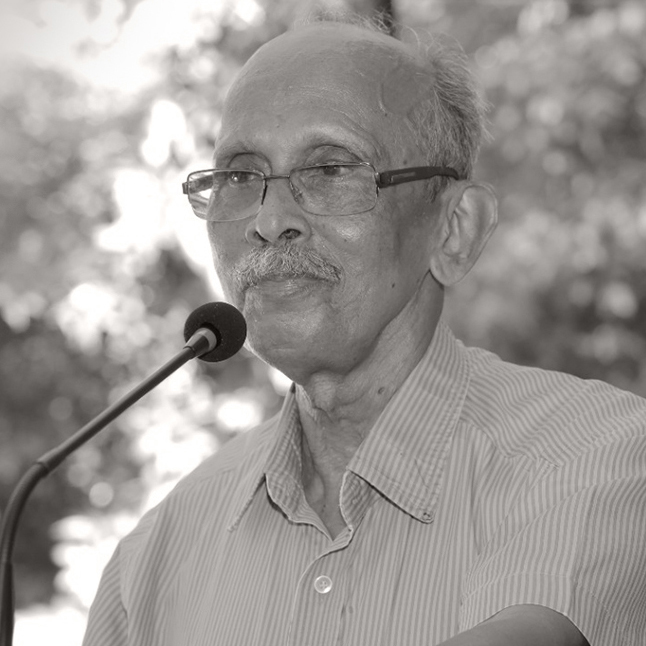
By Dr. K. M. George, Secretary-General, Global Millets Foundation & CEO, Sustainable Development Forum
A Century of Influence, A Moment of Reckoning
In 2025, the Rashtriya Swayamsevak Sangh (RSS) marks one hundred years of existence. From its modest beginnings in Nagpur in 1925 under Dr. K. B. Hedgewar, it has grown into the largest voluntary organization in India and perhaps the world, with over 50,000 daily shakhas and countless affiliates spanning education, trade unions, agriculture, women’s groups, and cultural forums.
Through its political wing, the Bharatiya Janata Party (BJP), the RSS today sits astride the commanding heights of India’s political system. It has shaped national debates, influenced policymaking, and redefined India’s global image.
And yet, at the very moment of triumph, it faces its greatest test. Centenaries are not just occasions for celebration but moments for sober stock-taking. The RSS and BJP now confront the question that determines their destiny: will they reform to embody inclusivity, humility, and service, or will they decline into arrogance, rigidity, and authoritarian excess?
Origins in Colonial Shadows
The RSS did not emerge from the mainstream of India’s freedom struggle but from the anxiety of a fractured Hindu society. Hedgewar, though once associated with the Congress, withdrew to form a disciplined cadre-based movement that emphasized Hindu pride, unity, and strength.
This orientation gave the RSS resilience but also exposed it to criticism. Unlike the Congress or revolutionary groups, the RSS did not challenge British rule directly. Instead, its early focus was inward: physical training, discipline, and character-building. While this avoided repression, it also left it open to charges of passivity during the struggle for independence.
This culture of inwardness shaped its DNA—long-term cadre-building, suspicion of outsiders, and an emphasis on cohesion rather than confrontation with external powers.
Growth Amid Controversy
The assassination of Mahatma Gandhi in 1948 by Nathuram Godse, a former RSS affiliate, cast a long shadow over the organization. Banned temporarily, the RSS survived by rebranding itself as a cultural and service body.
The formation of the Jana Sangh in 1951, and later the BJP in 1980, provided it with a political instrument. Its influence surged in the late 1980s and 1990s through the Ram Janmabhoomi movement, which both mobilized masses and deepened communal divides.
By 2014, with Narendra Modi—a lifelong pracharak—assuming the prime ministership, the RSS found itself at the very centre of state power. What had once been a cultural force on the periphery of politics was now shaping government from within.
The Double-Edged Sword of Power
Power is seductive, but also corrosive. The RSS once prided itself on being above politics. Today, however, its close entanglement with the BJP blurs the line between cultural movement and ruling party.
Institutions vital for democracy—such as the Election Commission, investigative agencies like the ED and NIA, and even the judiciary—are increasingly perceived as partisan tools. Such perceptions may deliver short-term political gain, but they exact a long-term price: the erosion of trust, unity, and sovereignty.
The moral credibility the RSS once commanded as a disciplined, non-political organization is in danger of being lost. Coercion cannot substitute for legitimacy; nor can the misuse of state machinery build enduring respect.
Shadows of History: The Mein Kampf Temptation
No honest centenary reflection can ignore troubling aspects of the RSS’s intellectual history. In its formative decades, some of its ideologues looked admiringly at European authoritarian movements. The emphasis on uniforms, salutes, rigid discipline, and even notions of cultural purity drew inspiration from contemporary fascist models.
It is historically recorded that Hitler’s Mein Kampf—the notorious handbook of his political philosophy—was read by some early RSS thinkers as a model of racial unity and national revival. To them, it seemed to offer a template for discipline and cohesion in the face of external threat.
But what Mein Kampf celebrated was not strength but exclusion: a delusional quest for racial purity enforced by fear, coercion, and violence. Such ideas, transplanted into India, are not merely alien but anti-civilizational. India’s greatness has always rested on its ability to absorb and transform diversity, not to erase it.
For the RSS at 100, the challenge is clear: it must decisively reject any lingering echoes of that authoritarian inheritance and root itself instead in India’s authentic traditions of pluralism, tolerance, and spiritual humanism. Only then can it avoid repeating history’s darker chapters.
Warning Signs of Decline
All great organizations face decay after long success. For the RSS, five warning signs are evident:
- Ideological rigidity that resists adaptation to modern realities.
- Moral compromise, as proximity to power encourages corruption and arrogance.
- Over-politicization, tying its fate to electoral cycles and partisan interests.
- Cultural arrogance, alienating minorities and moderates who feel excluded.
- Organizational stagnation, with outdated methods failing to attract youth.
If unaddressed, these signs will hollow the RSS, leaving it brittle when political winds shift.
Leadership and the Post-Bhagwat Era
Much of the RSS’s stability has rested on Mohan Bhagwat’s stewardship. He has projected moderation, occasionally urging reform and dialogue. Yet leadership transitions are inevitable.
The post-Bhagwat RSS will have to answer tough questions:
- Will it remain a moral compass, or decline into a partisan arm of the BJP?
- Can it embrace India’s diversity, or will it pursue homogenization?
- Will it stand by the Constitution, or risk sectarian re-interpretations that alienate millions?
- Can it sustain discipline without the hardships of opposition?
The answers will decide whether the RSS matures into a genuine national institution or contracts into a narrow sect.
Towards Renewal: Ten Corrective Steps
The RSS centenary offers a rare chance for reinvention. To reclaim moral credibility, it must:
- Reaffirm the Constitution as the supreme guide for national life.
- Reduce political overlap with the BJP to regain independence.
- End misuse of institutions, restoring faith in democracy.
- Foster interfaith trust with Muslims, Christians, Sikhs, Buddhists, and Parsis.
- Address internal social ills such as casteism, patriarchy, and rural distress.
- Reimagine youth engagement through technology, civic service, and education.
- Ensure financial transparency to counter suspicions of misuse.
- Adopt a global outlook, engaging with democratic and humanitarian traditions worldwide.
- Institutionalize ethical checks, creating independent oversight against corruption and arrogance.
- Champion unity, not division, recognizing that every Indian, regardless of faith or background, belongs to this nation.
From Supremacy to Service
The RSS’s original ideals—discipline, seva (service), swayamseva (volunteerism)—remain valuable. But in a democratic India, “service” must mean strengthening schools, healthcare, rural livelihoods, and opportunities for youth. It must mean alleviating poverty and inequality, not cultivating fear and exclusion.
A shift from supremacy to service would restore the RSS’s moral legitimacy, allow the BJP to re-root itself in inclusivity, and ensure that the movement is remembered as a force for national unity rather than sectarian division.
Conclusion: The Choice of Destiny
At 100, the RSS stands at a crossroads of history. It can either reform, shedding arrogance and authoritarian temptations, and embrace the inclusivity that India’s civilizational ethos demands. Or it can remain intoxicated by proximity to power, narrowing its vision until it collapses into irrelevance.
History is unforgiving: organizations that mistake temporary dominance for permanence eventually fade. Renewal, humility, and inclusivity—not rigidity and triumphalism—are the keys to enduring relevance.
The RSS must now decide whether its centenary will be remembered as a moment of ethical renewal or as the beginning of decline. The choice will not only shape its own legacy, but also the very texture of Indian democracy in the decades to come.