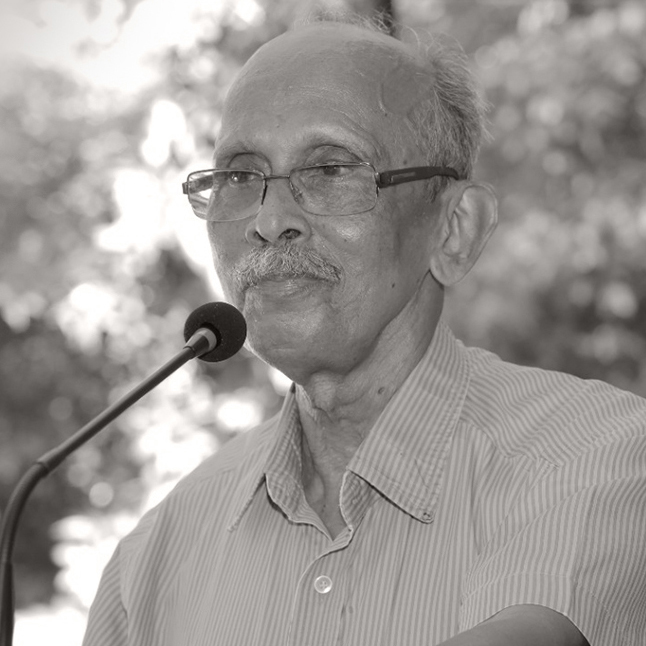
By Dr K. M. George
CEO, Sustainable Development Forum (SDF)
Former United Nations Professional
Email: melmana@gmail.com | Website: drkmgeorge.com
- Introduction
As the 27 November deadline attached to President Donald Trump’s proposed Ukraine peace framework approaches, global politics stands at a critical inflection point. For Ukraine, the ultimatum arrives amid weakened battlefield leverage, internal governance stresses, and sharply declining Western military support. For the United States, it marks an effort to reset its strategic commitments; for Europe, a test of strategic unity and responsibility; and for Russia, a potential exit from a costly war whose long-term economic sustainability is uncertain.
This article provides an objective, UN-style assessment of the Trump framework and its implications for global governance, economic stability, food and energy security, maritime norms, and the broader Indo-Pacific strategic balance. It evaluates consequences for India, ASEAN, Europe, and the United States, and concludes with ten actionable recommendations for shaping a sustainable and rules-based settlement.
- Overview of the Trump Framework
The 28-point draft proposal outlines sweeping demands on Ukraine:
- Territorial concessionscovering Crimea, Donetsk, Luhansk, and significant portions of Kherson and Zaporizhzhia.
- Permanent neutralityand removal of the NATO membership objective from Ukraine’s constitution.
- Reduction of Ukraine’s armed forcesto 600,000 personnel.
- Immediate lifting of Western sanctionson Russia.
- National elections within 100 daysof signing.
- Amnestyfor all Russian and Ukrainian officials and combatants.
- International monitoringof compliance.
These terms diverge sharply from previous Western positions, particularly regarding territorial integrity, sovereignty, and the sequencing of sanctions relief.
III. Strategic Realities Underpinning the Proposal
- Battlefield Dynamics
Recent developments indicate:
- Near-collapse of Ukrainian defences in parts of Donetsk.
- Critical pressure on Pokrovsk, a logistics hub essential for Ukraine’s eastern operations.
- Diminishing Ukrainian manpower, ammunition, and air-defence systems.
- Limited U.S. assistance due to political deadlock.
- Insufficient European industrial capacity to fill the gap.
- Strengthened Russian mobilisation and upgraded drone, missile, and artillery production.
These conditions diminish Kyiv’s negotiating leverage and partly explain Washington’s urgency for a near-term settlement.
- Governance Strains in Kyiv
A major corruption scandal involving senior officials close to President Zelensky has weakened public confidence and complicated Ukraine’s relationship with Western donors. For the U.S.—already facing budget pressures and domestic political constraints—this undermines appetite for open-ended military commitments.
- Russia’s Strategic Posture
Despite sanctions, Russia has stabilised parts of its economy through:
- Redirected energy exports to Asia.
- Rapid state-led industrial restructuring.
- Intensified defence manufacturing.
- Strategic partnerships with China, Iran, and North Korea.
The Kremlin may see the Trump plan as an opportunity to consolidate gains while avoiding deeper economic strain.
- Implications for India
India evaluates the conflict through strategic autonomy, non-alignment, energy security, global food-price stability, and protection of Indian workers across Europe and Russia.
- Energy and Commodity Security
A negotiated settlement could stabilise:
- Oil and gas prices.
- Fertiliser markets.
- Wheat and sunflower oil supply chains.
Given India’s vulnerability to commodity shocks, peace—however imperfect—serves national economic interests.
- Defence Cooperation with Russia
With 60–70% of India’s military inventory sourced from Russia, a prolonged war threatens:
- Supply chains.
- Spare parts and maintenance.
- Induction of new technologies.
A ceasefire could relieve pressure on Russian defence production, enabling India to maintain operational readiness while continuing diversification.
- Multipolar Stability
A calmer Europe allows:
- Greater U.S. bandwidth in the Indo-Pacific.
- Reduced European dependence on Washington.
- More coherent engagement with Global South priorities.
India supports peace but remains wary of precedents that legitimise territorial revisionism.
- Implications for ASEAN
ASEAN’s priorities—maritime stability, open supply chains, economic integration, and non-aligned diplomacy—are directly affected by the Ukraine conflict.
- Economic Exposure
ASEAN economies face inflation and volatility due to:
- Disruptions in food and fertiliser flows.
- Higher shipping and insurance costs.
- Price instability in metals and energy.
A negotiated outcome would reduce these pressures.
- Strategic Signalling
ASEAN states observe the war through the lens of:
- Territorial integrity.
- Freedom of navigation.
- The dangers of coercive power in maritime zones.
A settlement that rewards territorial conquest could undermine ASEAN’s security environment, especially in the South China Sea.
- Diplomatic Neutrality
Many ASEAN members maintain strategic flexibility between the West, China, and Russia. A negotiated peace that avoids bloc polarisation aligns with ASEAN’s diplomatic culture.
- Europe’s Strategic Dilemma
Europe is divided across multiple lines:
- Northern and Western Europe: firm on sovereignty and opposition to territorial concessions.
- Central and Eastern Europe: fear that appeasement could invite future aggression.
- Southern Europe: prefer swift de-escalation due to economic pressures.
- Hungary: endorses the Trump plan openly.
The structural challenges—declining ammunition stocks, political polarisation, and industrial underperformance—complicate Europe’s ability to replace the U.S. as Ukraine’s primary security guarantor.
VII. United States: A Strategic Recalibration
The U.S. recalibration reflects:
- Congressional deadlock over Ukraine funding.
- Focus on China and the Indo-Pacific.
- Public fatigue with long-term foreign engagements.
The Trump plan signals a pivot toward transactional diplomacy: territorial concessions traded for immediate cessation of hostilities. This shifts long-term responsibility to Europe while preserving U.S. flexibility.
VIII. Russia’s Likely Negotiation Strategy
Moscow will prioritise:
- Legitimacy for territorial acquisitions.
- Sanctions relief framed as part of a broader settlement.
- Neutrality guarantees preventing NATO expansion.
- International monitoring to stabilise controlled regions.
Russia is likely to seek a structured endgame that balances geopolitical achievements with economic breathing room.
- Principles for a Sustainable Settlement
From a UN policy standpoint, a viable peace must include:
- Territorial Mechanisms
Options may include demilitarised zones, special administrative regimes, or future referendums under international oversight.
- Security Guarantees
Ukraine requires binding multilateral assurances and long-term defensive support.
- Humanitarian Protections
Including safe return of displaced populations, minority rights, and credible frameworks for accountability.
- Economic Reconstruction
Linked to transparent governance mechanisms and EU-aligned recovery programmes.
- Why India and ASEAN Have a Collective Stake
For the Global South, the Ukraine war directly affects:
- Food prices
- Fertiliser supply
- Maritime transport
- Inflation
- Worker mobility
- Defence preparedness
- Global economic growth
India and ASEAN therefore seek:
- Stability
- Respect for international law
- Predictability in markets
- Prevention of coercive border changes
A poorly structured ceasefire risks future instability; a monitored, enforceable settlement strengthens global governance.
- Ten-Point Implementation Recommendations
- Establish a UN/OSCE-led International Ceasefire Monitoring Mission.
- Sequence sanctions relief to verifiable compliance milestones.
- Create demilitarised interim administrations for disputed territories.
- Implement internationally supervised referendums only after full demilitarisation.
- Provide binding multinational security guarantees for Ukraine.
- Launch a coordinated reconstruction fund with anti-corruption oversight.
- Secure global food, fertiliser, and energy corridors with maritime protection mechanisms.
- Develop a Global South Stabilisation Compact for early warning on commodity shocks.
- Affirm global norms against territorial change by force through joint declarations.
- Establish a long-term peacebuilding and accountability track under UN supervision.
Conclusion
Ukraine now stands at a crossroads with implications far beyond Europe.
The Trump framework—regardless of its political reception—forces an overdue strategic conversation on the future of global security, great-power equilibrium, and the durability of the rules-based order.
For India, ASEAN, and the wider Indo-Pacific, the stakes are immediate and concrete: economic stability, food and energy security, maritime safety, and the principle that borders cannot be revised through force.
A sustainable peace must be realistic, enforceable, consistent with the UN Charter, and anchored in international legitimacy. Anything less risks instability not only in Europe, but across the emerging multipolar world.