A Global Policy Paper for Governments, UN Agencies, and Development Stakeholders
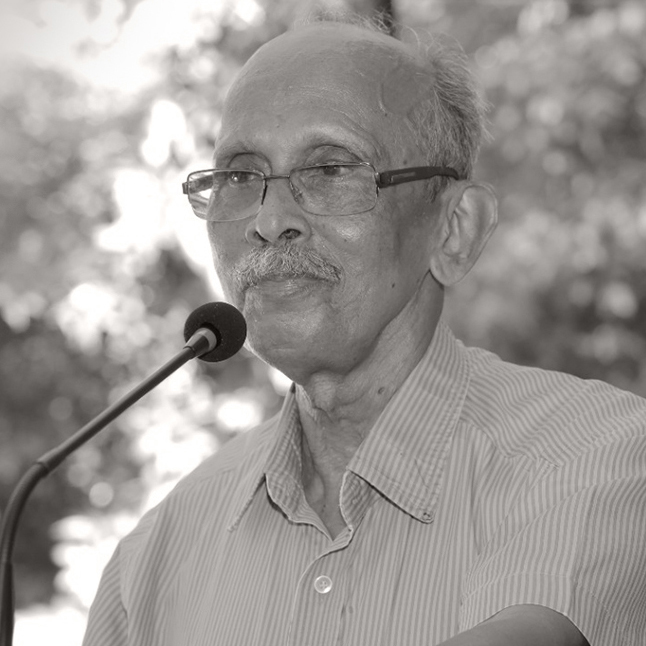
Dr K. M. George
Secretary-General, Global Millets Foundation
CEO, Sustainable Development Forum
Email: melmana@gmail.com
Website: http://drkmgeorge.com
Executive Summary
Young professionals today stand at a decisive intersection of demographics, development, digital disruption, and planetary sustainability. Their empowerment is no longer a social aspiration but an economic urgency. While nearly 1.8 billion people globally are between 15 and 35, vast structural inequalities—between North and South, urban and rural, digital haves and have-nots—persist, preventing millions of young professionals from contributing meaningfully to national development and global sustainability.
This policy paper investigates past trends, present realities, and future possibilities for empowering educated youth. It offers a comparative survey of Asia–Pacific, Africa, Latin America and the Caribbean, Europe, and North America, capturing regional challenges and opportunities. It highlights the developmental trajectories of emerging global powers—China, India, and Brazil—and identifies lessons from their strategies. It further maps the roles of UN bodies and international agencies in reimagining youth empowerment for the SDG era.
Finally, it concludes with ten time-bound, actionable agenda items for governments, UN agencies, multilaterals, and civil society partners.
- Introduction
The empowerment of young professionals has historically driven economic transformation—from Europe’s industrial revolution to the Asian miracles of the late 20th century. Today, in an era marked by climate distress, rapid urbanisation, AI-driven automation, and growing inequalities, young professionals hold the key to both economic renewal and social resilience.
The global development architecture—UN agencies, development banks, and national governments—has long acknowledged this but often lacked coherent, sustained, and inclusive strategies. With the SDG deadline of 2030 approaching, the need to unlock the potential of educated youth has never been more pressing.
This paper argues that empowering young professionals is central to:
- closing the global skills gap,
- accelerating innovation and technology diffusion,
- promoting inclusive growth,
- strengthening governance and civic participation, and
- ensuring ecological sustainability.
- Past Trends: A Global Retrospective on Youth Empowerment
2.1 Post-War Reconstruction and the Rise of the Welfare States
Western Europe and North America invested heavily in technical and vocational education after 1945. Young professionals drove technological modernisation, welfare expansion, and democratic stability.
2.2 The Asian Developmental State Model
From Japan to South Korea, Taiwan, and Singapore, the state actively cultivated young professionals through:
- subsidised STEM education,
- scholarships abroad,
- strong vocational ecosystems,
- government–industry collaboration.
These policies catalysed rapid industrialisation.
2.3 The Global South’s Struggles
Despite pockets of success, many nations faced:
- chronic underinvestment in higher education,
- limited job opportunities,
- migration of skilled youth (brain drain),
- political instability and weak governance.
2.4 Digital Globalisation and the Knowledge Economy
From the early 2000s, IT and global outsourcing created new mobility for youth but widened digital divides, particularly in Africa, South Asia, and Latin America.
- A Comparative Global Survey: The State of Young Professionals Today
Below is a region-by-region analysis, assessing demographic trends, challenges, and prospects.
3.1 Asia–Pacific
3.1.1 Key Characteristics
- World’s largest youth population
- Rapid digitalisation but uneven distribution
- Massive urban migration
- Expanding middle class
3.1.2 Challenges
- Skills mismatch between education and industry
- Inequality between megacities and rural areas
- High unemployment in South Asia
- Gender disparity in STEM fields
- Climate vulnerability (coastal communities, Pacific Islands)
3.1.3 Prospects
- India and ASEAN emerging as global digital hubs
- Strong potential in green jobs, AI, blue economy
- Regional cooperation through ASEAN, SAARC, SCO can unlock cross-border opportunities
3.2 Africa
3.2.1 Key Characteristics
- Fastest-growing youth population in the world
- Rich natural resources but limited value addition
- Strong entrepreneurial culture
3.2.2 Challenges
- Very high youth unemployment (often >40%)
- Weak industrial bases
- Underfunded universities
- Digital gaps and unreliable electrification
- Climate stress, desertification, and water scarcity
3.2.3 Prospects
- Africa is poised to be a global talent hub if investments are directed to:
- ICT and digital skills,
- green industries,
- agribusiness and food systems,
- intra-African trade (AfCFTA).
- The African diaspora is an underutilised strength.
3.3 Latin America and the Caribbean
3.3.1 Key Characteristics
- High education levels
- Strong cultural creativity
- Emerging tech clusters (São Paulo, Mexico City, Bogotá)
3.3.2 Challenges
- Political volatility
- Urban violence and insecurity
- Weak productivity growth
- Climate-induced migration
- Inequality across indigenous communities
3.3.3 Prospects
- Renewable energy superpower potential (solar, wind, hydro)
- Green entrepreneurship
- Social innovation and civic tech
3.4 Europe
3.4.1 Key Characteristics
- Ageing population
- Well-established education and welfare systems
- Strong innovation ecosystems
3.4.2 Challenges
- Shrinking youth labour force
- Difficulties integrating migrant youth
- Rising political polarisation
- Overregulation slowing mobility
3.4.3 Prospects
- EU Green Deal offers vast green and digital jobs
- Creative industries and research excellence
- Blue economy across Mediterranean and Nordic regions
3.5 North America
3.5.1 Key Characteristics
- Highly entrepreneurial youth
- Advanced digital and R&D infrastructure
- Strong private-sector engagement
3.5.2 Challenges
- Inequality across race, class, and regions
- High costs of education
- Political polarisation
- AI-driven disruption in labour markets
3.5.3 Prospects
- Innovation in AI, biotech, clean energy
- Growing emphasis on purposeful work
- Opportunities for climate leadership
- Emerging Superpowers: Youth Empowerment Strategies
4.1 China
- Massive investment in engineering education
- Government-led innovation parks
- Digital authoritarian model creates efficiency but raises ethical questions
- Challenges: youth unemployment rise, shrinking workforce, limits on creative freedom
4.2 India
- World’s largest youth population
- Booming digital economy and startup ecosystem
- Strong democratic and civic energy
- Challenges: bureaucratic hurdles, uneven education quality, rural–urban divide
4.3 Brazil
- Strong cultural capital and biodiversity
- Increasing focus on renewable technologies
- Youth engagement in social and environmental movements
- Challenges: inequality, governance complexity, fiscal constraints
- The Role of UN Bodies and International Agencies
UN agencies must shift from advisory roles to active empowerment catalysts.
5.1 UNDP
- Build youth innovation labs
- Support policy reforms
- Strengthen local governance participation
5.2 FAO
- Promote youth-led agribusiness
- Digital agriculture platforms
- Climate-resilient food systems
5.3 UNESCO
- Reform higher education systems
- Mainstream green and digital skills
- Foster academic mobility across Global South
5.4 ILO
- Youth employment compacts
- Apprenticeships and skills credentialling
- Protection against informalisation
5.5 UNICEF
- Support learning-to-earning transitions
- Improve early child development to reduce future inequalities
5.6 World Bank & Regional Banks
- Finance youth enterprises
- Invest in digital infrastructure
- Strengthen vocational ecosystems
5.7 UN Environment Programme
- Green jobs mapping
- Young climate entrepreneurs’ networks
- Circular economy solutions
5.8 UN SDG Architecture
- Coordinate youth-specific SDG accelerators
- Harmonise youth indicators across nations
- Major Structural Challenges
- Skills mismatch—education systems not aligned to industry needs
- Digital divide—especially in Africa and South Asia
- Climate crisis—disproportionate impact on young livelihoods
- Urban–rural divide—concentration of opportunities in megacities
- Political instability—affecting the Middle East, Sahel, Latin America
- Automation—AI-driven job displacement
- Migration pressures—brain drain from Global South to North
- Gender disparities—in STEM, leadership, and income
- Access to finance—youth enterprises struggle for early-stage capital
- Weak participatory governance—youth excluded from policymaking
- A New Vision: Young Professionals as SDG Accelerators
7.1 From beneficiaries to partners
Young professionals should not be recipients of charity but co-creators of development.
7.2 From jobs to meaningful work
Policies should integrate purpose, climate responsibility, and care.
7.3 From national silos to global mobility
Cross-border credentialling, internships, and collaborative research.
7.4 From analogue governance to digital democracies
Youth should lead civic tech, open data, and public innovation.
- Policy Recommendations
This section provides a comprehensive framework for governments, UN systems, private sector actors, academia, and civil society.
- Ten Actionable Agenda Items (Time-Bound)
(For implementation by 2030, aligned with SDGs)
- Establish National Youth Skills Missions (2025–2030)
Reform higher education and vocational systems with industry alignment and green–digital competencies.
- Create Youth Innovation & Entrepreneurship Funds (2025)
Governments and development banks to commit dedicated financing windows for young entrepreneurs.
- Universal Digital Connectivity for Youth (2026)
Ensure high-speed internet access for all youth through public–private partnerships.
- Youth Apprenticeship and Mobility Compacts (2026–2030)
UN agencies to coordinate cross-border internships and apprenticeships, especially South–South.
- Green Jobs Accelerator Platform (2025)
Map green job opportunities globally and train youth in climate-smart skills.
- Local Governance Youth Councils (by 2025)
Institutionalise youth participation in municipal and regional governance.
- Global Youth Volunteering Corps (2026)
UNDP, UNICEF, and UNESCO to expand peace, climate, education, and health volunteer programmes.
- Youth-Led Agrifood Transformation (2025–2030)
FAO and IFAD to scale digital agriculture, millets, regenerative farming, and food security entrepreneurship.
- AI and Future Skills Charter (2025)
ILO and UNESCO to regulate AI-driven labour disruptions and certify future-ready skills.
- Integrated SDG Youth Dashboard (by 2026)
UN DESA to develop a global monitoring system on youth employment, education, climate action, and mobility.
Conclusion
The world stands at a historic moment where young professionals can become architects of inclusive prosperity and planetary stability. But this requires coordinated global action, political will, and bold investment. By adopting the policies outlined in this paper, governments and UN agencies can transform youth potential into a sustainable development force—creating resilient economies, just societies, and a harmonious planet for future generations.